
Because the seasons change, and the nice and cozy months come to an finish, farmers the world over reap their crops. This common activity renders the harvest a timeless topic for artists. Endurance and fragility contrasted towards abundance and pleasure, and certain collectively for survival, has grown the harvest right into a ripe image for the choosing. Throughout cultures, gods have been revered to make sure a bountiful crop, intrinsically tying important assets and work to divinity. In different iterations, the harvest turns into melancholic, virtuous, and generally even erotic.
The Artwork By way of Symbols sequence explores the interpretation of symbols all through artwork historical past – whether or not cultural, non secular, folkloric, or private. Every article analyses a choice of artworks earlier than providing an art-making tutorial impressed by the image so that you can strive.
Deciphering the Harvest
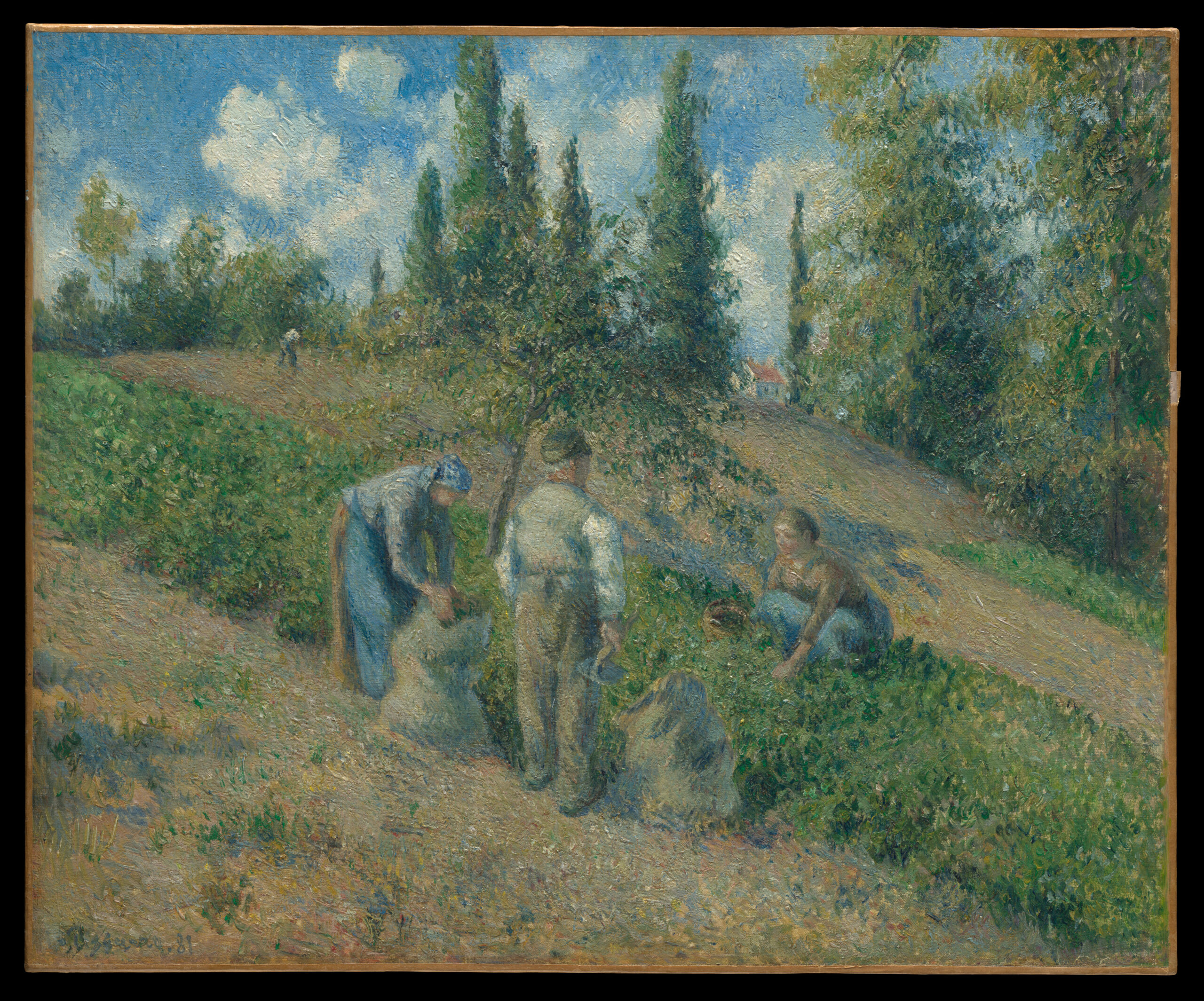
Camille Pissarro
Oil on canvas, 46 × 55.2 cm | 18.1 x 21.7 in
The Metropolitan Museum of Artwork
‘Blessed are they who see lovely issues in humble locations the place different folks see nothing.’
– Camille Pissarro
In our previous, the cycles of the harvest have been extra carefully tied to folks’s every day realities. Now, with many people dwelling within the sprawl of cities, a significant proportion of the worldwide inhabitants consumes produce with out ever having to confront the truth of the way it’s grown or collected. For a lot of fashionable viewers, our detachment from agriculture has made art work depicting the harvest appear idyllic. But the labour continues, albeit generally with higher industrialisation and scale. Nevertheless a lot equipment has superior, the forces of nature and the seasons are unavoidable elements in farming. This uncontrollable ingredient of nature, and the affect people attempt to exert over it, is important to decoding the harvest in artworks.
Throughout cultures, an plentiful or poor harvest has been tied to the blessings or curses of the gods. This correlation is a part of the intuitive human tendency to expertise nature by a religious lens. Due to this fact, many artworks depicting the harvest carry a symbolic sense of piety or exultation, expressing the advantage of arduous work. That is partly rooted in Christian parables that check with the harvest, the place the souls of virtuous believers develop into metaphors for crops able to be reaped.
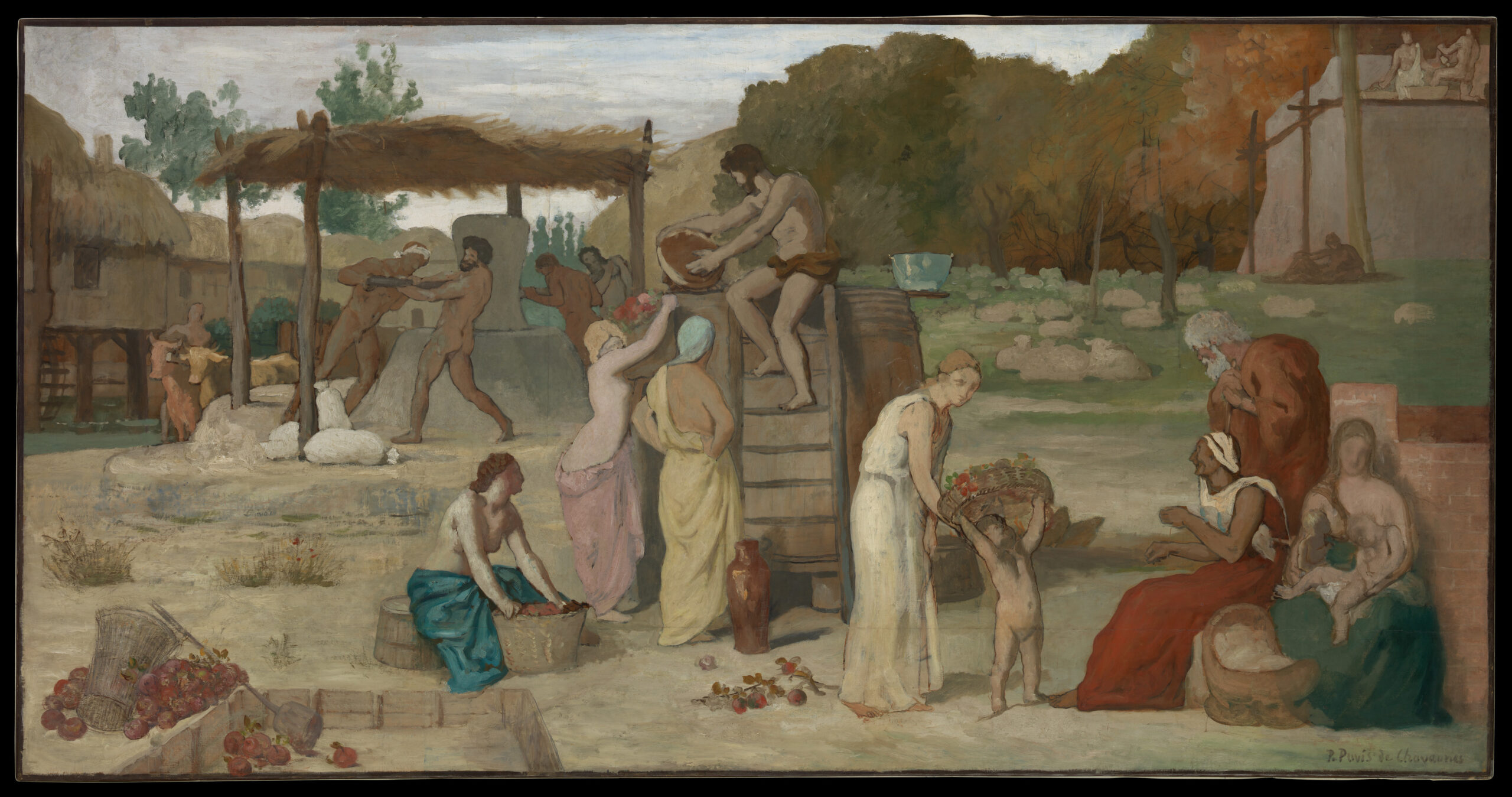
Pierre Puvis de Chavannes
Oil on paper, laid down on canvas, 129.5 x 252.1 cm | 51 x 99.3 in
The Metropolitan Museum of Artwork
Given the wrestle concerned in producing a bountiful harvest, it’s no surprise that the thought of a utopian harvest appealed to artists who imagined a world the place abundance required no toil. This is mirrored within the eroticism of artworks depicting Greek and Roman gods relishing in hedonistic abundance, the place love, sustenance, and indulgence are carefully intertwined. These contrasting but equally potent associations made the harvest an interesting topic for artists of differing ideologies, together with the Romantics and Realists alike.
Divine Blessing
Shintō is a polytheistic and animistic faith from Japan, with an intensive mythology and folklore. It centres round a forged of supernatural beings generally known as kami which embody deities, spirits, pure options, forces of nature, and even the lifeless. Kami are believed to inhabit the pure world and may possess each constructive and damaging traits. Inari is a kami who protects rice cultivation and seems in varied varieties in artwork. These embody a younger lady with lengthy hair carrying rice, or a bearded man driving a white fox. White fox yōkai, or demons, generally known as kitsune, function Inari’s messengers, travelling between the religious and human realms and generally bringing information of bountiful harvests.
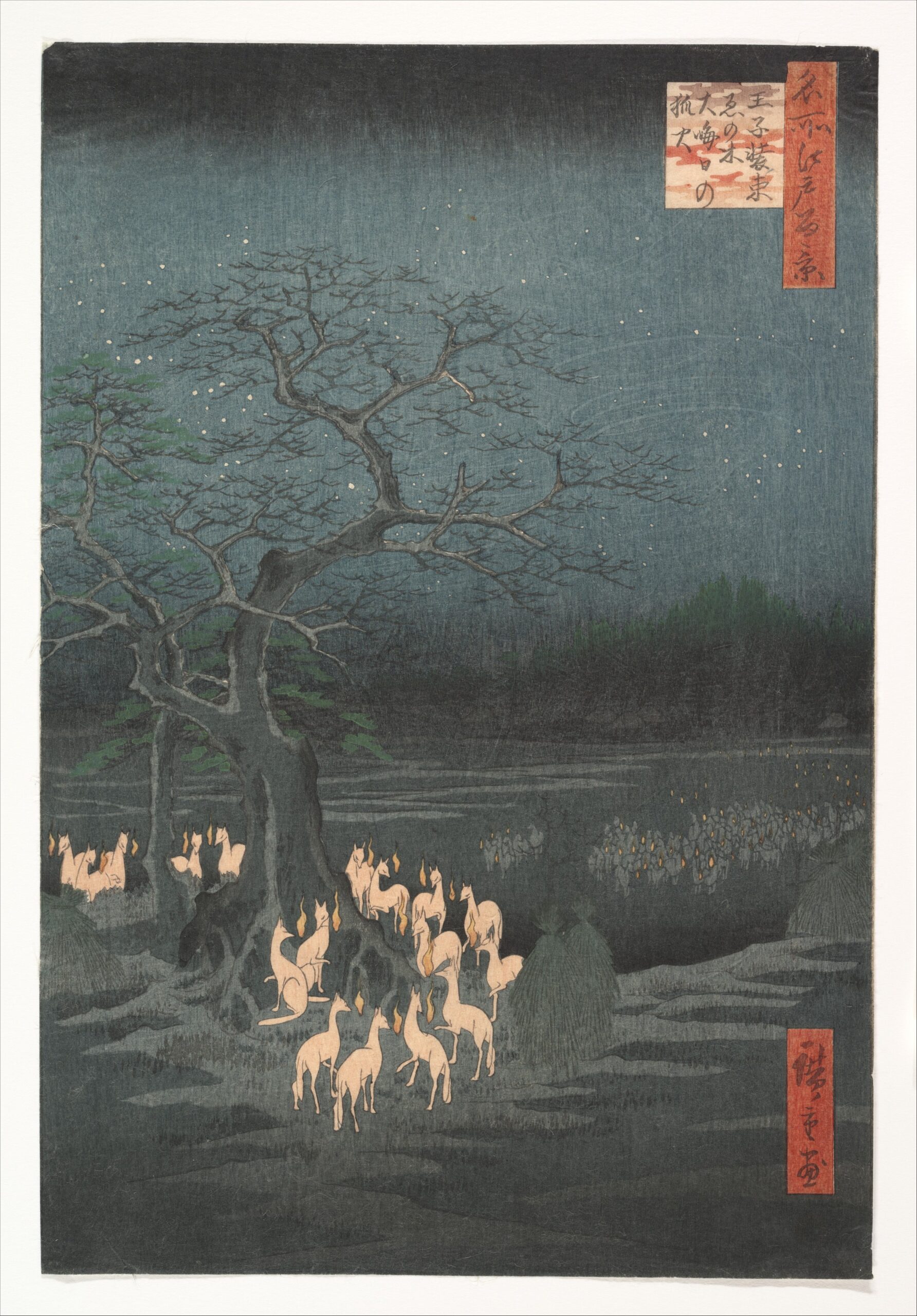
Utagawa Hiroshige
Woodblock print on paper, 32.5 × 21.9 cm | 12.8 x 8.6 in
The Metropolitan Museum of Artwork
At numerous Inari shrines throughout Japan, fox statues stand as guardians, the place farmers, retailers, and customers alike present devotion within the hope of securing prosperity and sustenance. In New 12 months’s Eve Foxfires on the Altering Tree, Ōji, by Hiroshige, the kitsune assemble beneath the Altering Tree, close to the Inari shrine in Ōji. Based on folklore, on their strategy to to have a good time, the foxes gentle mysterious fires generally known as kitsunebi, which farmers rely to foretell the success of the approaching rice harvest. Every fox cultivates their very own flame in entrance of them, illuminating the shadowy darkness of the panorama they bring about hope to.
Labour, Endurance, and Fragility
Artists of the Naturalist motion, which spanned the late nineteenth and early twentieth centuries, typically commemorated agricultural employees of their work. By way of the hardship of their labour, these employees embodied the right subject material to be painted with cautious realism. In The Tune of the Lark, a peasant lady stands proudly, her face upturned in awe as she listens intently to a lark’s track. She grasps her sickle confidently, utterly at one with the panorama round her bathed within the rising gentle of the rising solar. Jules Breton was from Courrières, a rural village in northern France. His experiences right here gave him a deep empathy for the farm employees he depicted. By representing them with dignity with out diminishing the problem of their work, his works are amongst among the most poignant portrayals of harvesters. For Breton, the harvest turns into an emblem of noble responsibility.
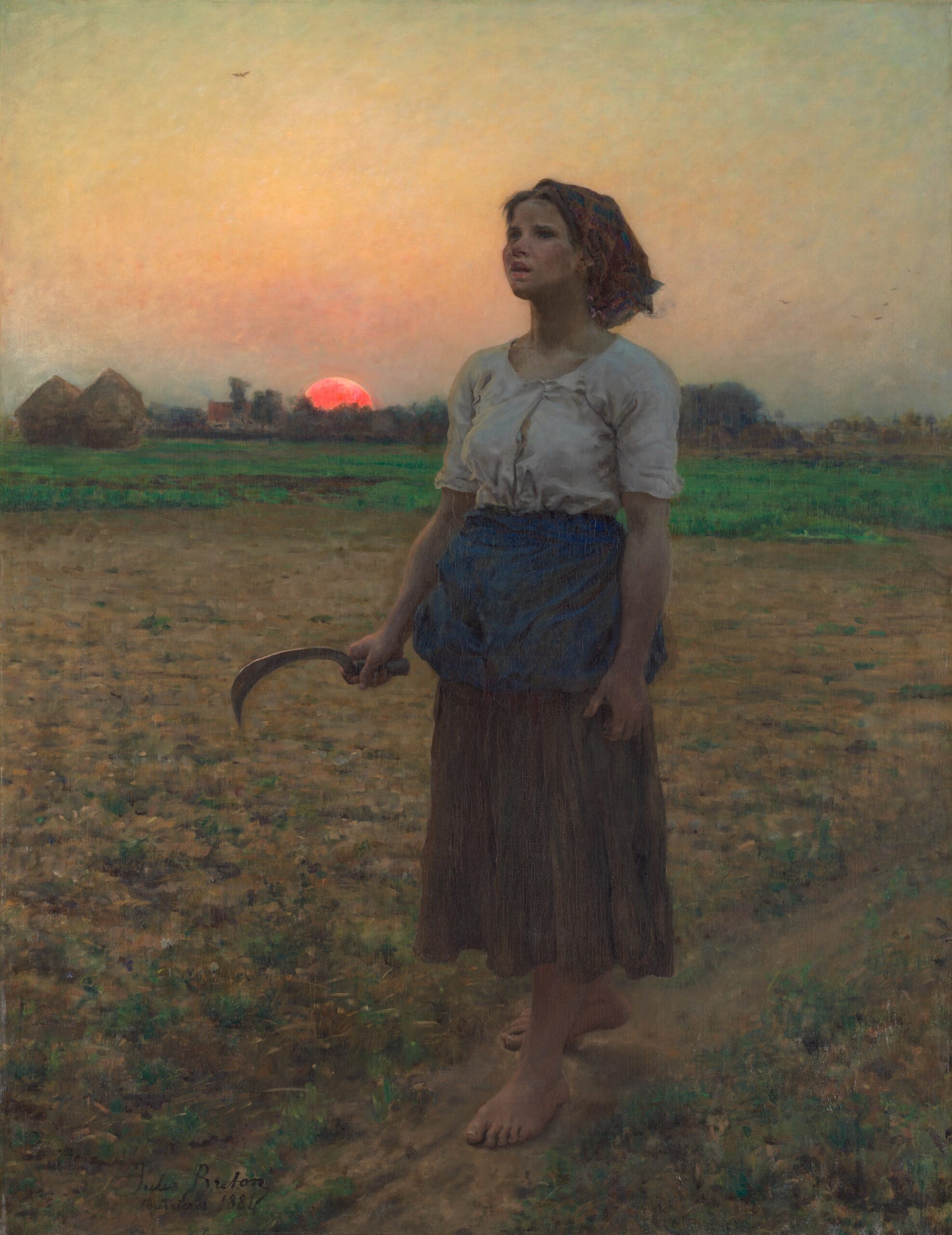
Jules Breton
Oil on canvas, 110.6 × 85.8 cm | 43.5 x 33.8 in
Artwork Institute of Chicago
The Gleaners by Jean-François Millet is amongst probably the most famend work depicting labourers within the panorama. In it, three ladies toil uncomfortably, bent in direction of the bottom. They methodically comb the freshly harvested wheat area for any stray stalks left behind, tasked with accumulating them one after the other. The austerity of their activity contrasts straight with the abundance of the stacks of wheat within the area past them. Class stratification provides additional distinction to the work, as a steward on horseback supervises the harvest within the background. One other of Millet’s works, A Norman Milkmaid at Gréville, was painted after he returned to his hometown for a yr to flee the Franco-Prussian Battle. On his return he wrote:
‘I went over the fields that I as soon as plowed and sowed. The place are those that labored with me? The place are these pricey eyes that, with me, gazed over the scratch of the ocean?’
The portray is imbued with melancholy and a way of loss, conveyed by the robust, solitary lady dramatically backlit by the setting solar.
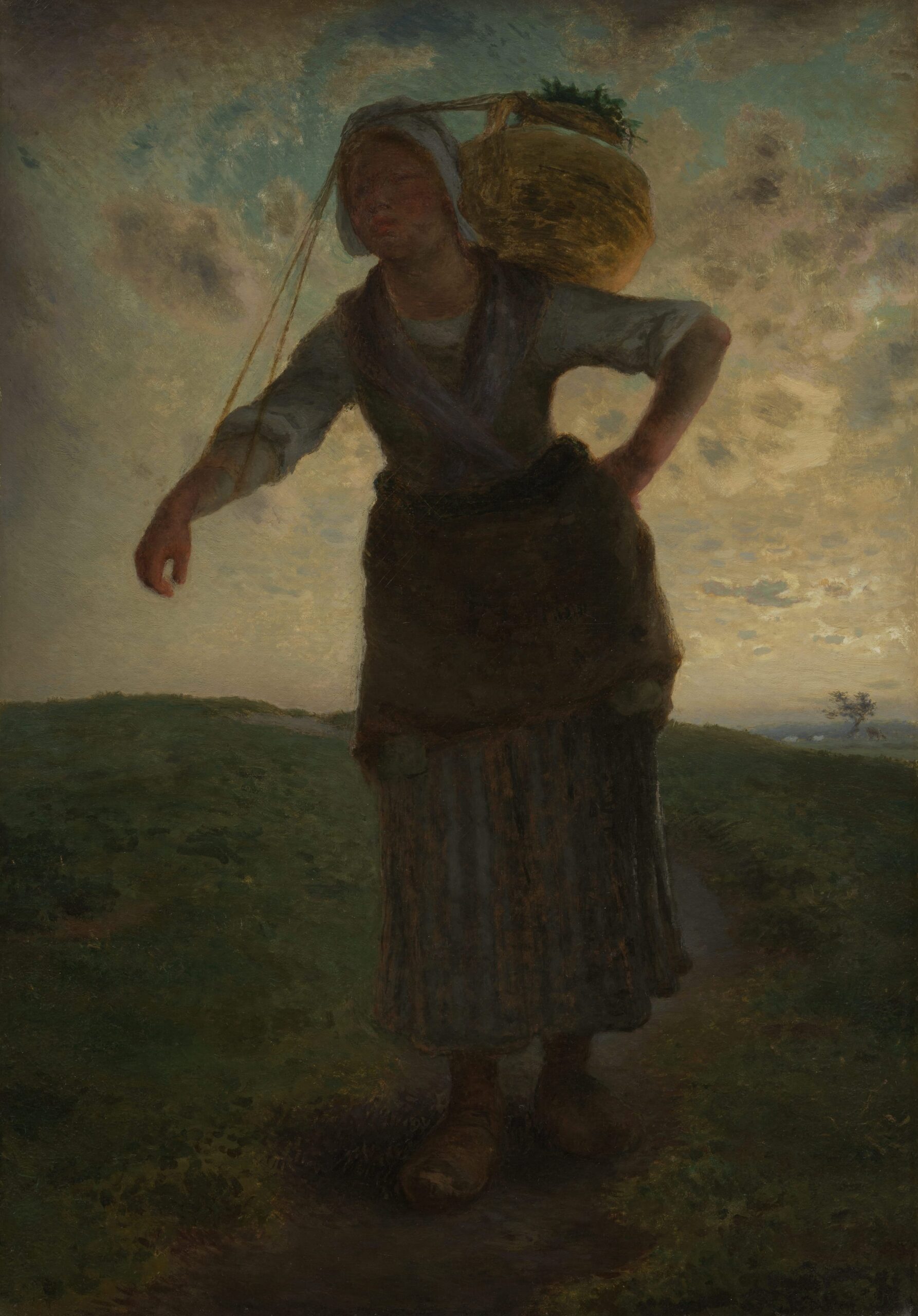
Jean-François Millet
Oil on canvas mounted on paperboard, 80 × 55.6 cm | 31.5 x 21.9 in
LACMA
Artworks of agricultural labourers have persevered all through fashionable and modern artwork, together with some of the famed sequence of pictures in artwork historical past, which incorporates Destitute Pea Pickers. Dorothea Lange pulled onto a facet street after seeing an indication marking a camp for seasonal farm employees in Nipomo, California, whose livelihoods had been destroyed by a failed crop from freezing climate. There, she photographed a mom, Florence Owens Thompson, and her seven youngsters dwelling in poverty. These pictures consciously emulate conventional imagery of the Madonna and youngster. The sequence grew to become emblematic of the strife skilled by migrant employees in the course of the Nice Despair. Right here, the harvest is dually symbolic of human resilience and fragility.
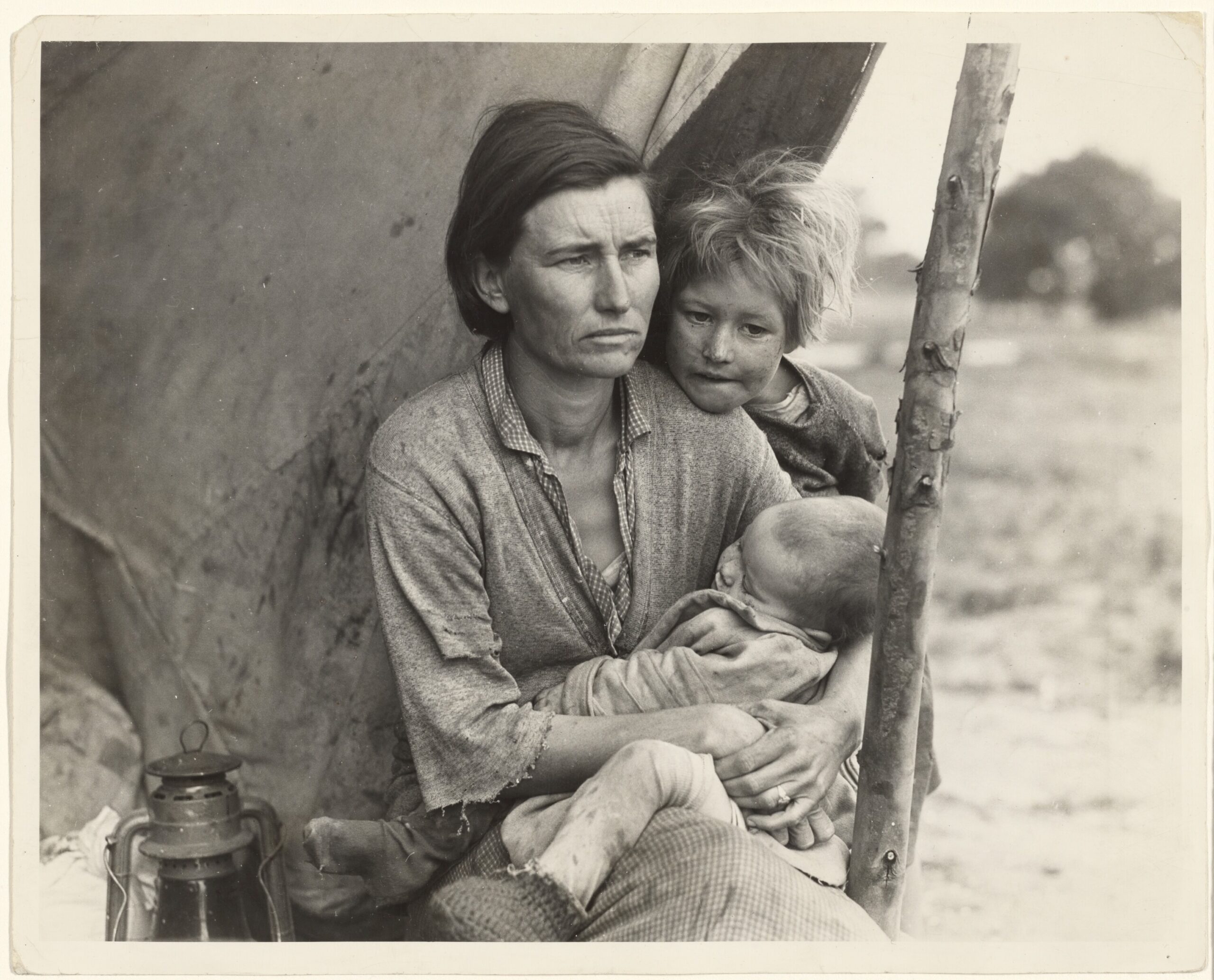
Dorothea Lange
Gelatin silver print, 19.1 × 24.3 cm | 7.5 x 9.6 in
Getty Museum
Rebirth and Sacrifice
Osiris was an extremely busy god in Egyptian mythology. Alongside his position as King of the Underworld, tasked with the judgement of the lifeless, through which their hearts have been weighed towards the feather of Ma’at to deem their worthiness to enter the afterlife, Osiris was additionally believed to merge with each deceased pharaoh to develop into him in dying. Osiris offered fertility and agricultural prosperity by the annual flooding of the Nile. It was believed that the flooding of the Nile was brought on by bodily fluids flowing from Osiris’ corpse after he was murdered by his brother Set, the god of chaos and dysfunction. Osiris was considered because the ‘first mummy’, as his physique was reassembled by Isis, who ritualistically wrapped him in linen to organize him for rebirth.
In artworks, Osiris is commonly depicted with inexperienced pores and skin, representing the fertile banks of the Nile which he delivered to life annually by his rebirth. He embodied dying, judgement, resurrection, and progress by his cyclical nature – sustaining the stability of the universe and mirroring the agricultural calendar. To make sure a bountiful harvest, monks would create corn mummies set in coffins within the picture of Osiris. They’d fill these with mud from the Nile and grain seeds, resembling barley and wheat, which they might water and permit to sprout. The earlier yr’s corn mummies can be buried as new ones sprouted, to symbolically make means for his rebirth, and make sure the subsequent harvest.
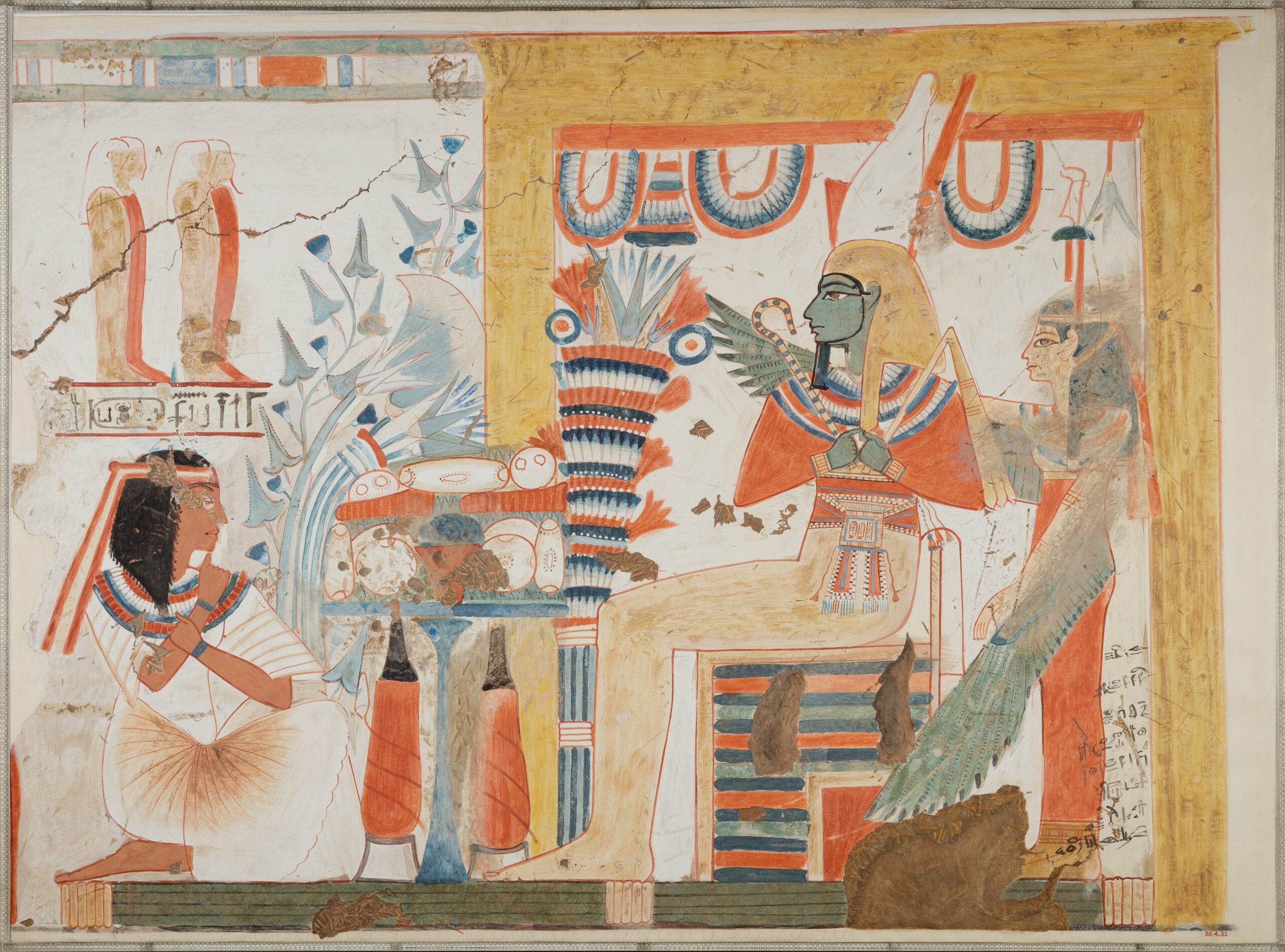
Norman de Garis Davies after New Kingdom artists
Tempera on paper, 67 × 91 cm | 26.4 x 35.8 in
The Metropolitan Museum of Artwork
In Greek mythology Demeter, generally known as Ceres to the Romans, was the goddess of the harvest, agriculture, and fertility and is commonly depicted holding grains, fruits, or flowers. Demeter was generally thought to be an earth goddess in a broader sense by sure cults that commemorated her. She gifted the data of agriculture to humankind, subsequently giving them sustenance. Her daughter Persephone can also be related to the cycles of the seasons. She was kidnapped by Hades, god of the underworld, who wished to marry her. Demeter’s grief at her daughter’s kidnapping prompted the earth to develop into barren and all of the world’s crops to fail, and Zeus ordered that her daughter be returned, offered she hadn’t eaten something within the underworld. Hades tricked Persephone into consuming just a few pomegranate seeds, which saved her certain to return to him yearly for half the yr. Her return from the underworld annually marks the start of Spring, and her descent marks the start of Autumn, when the crops develop into prepared to reap.
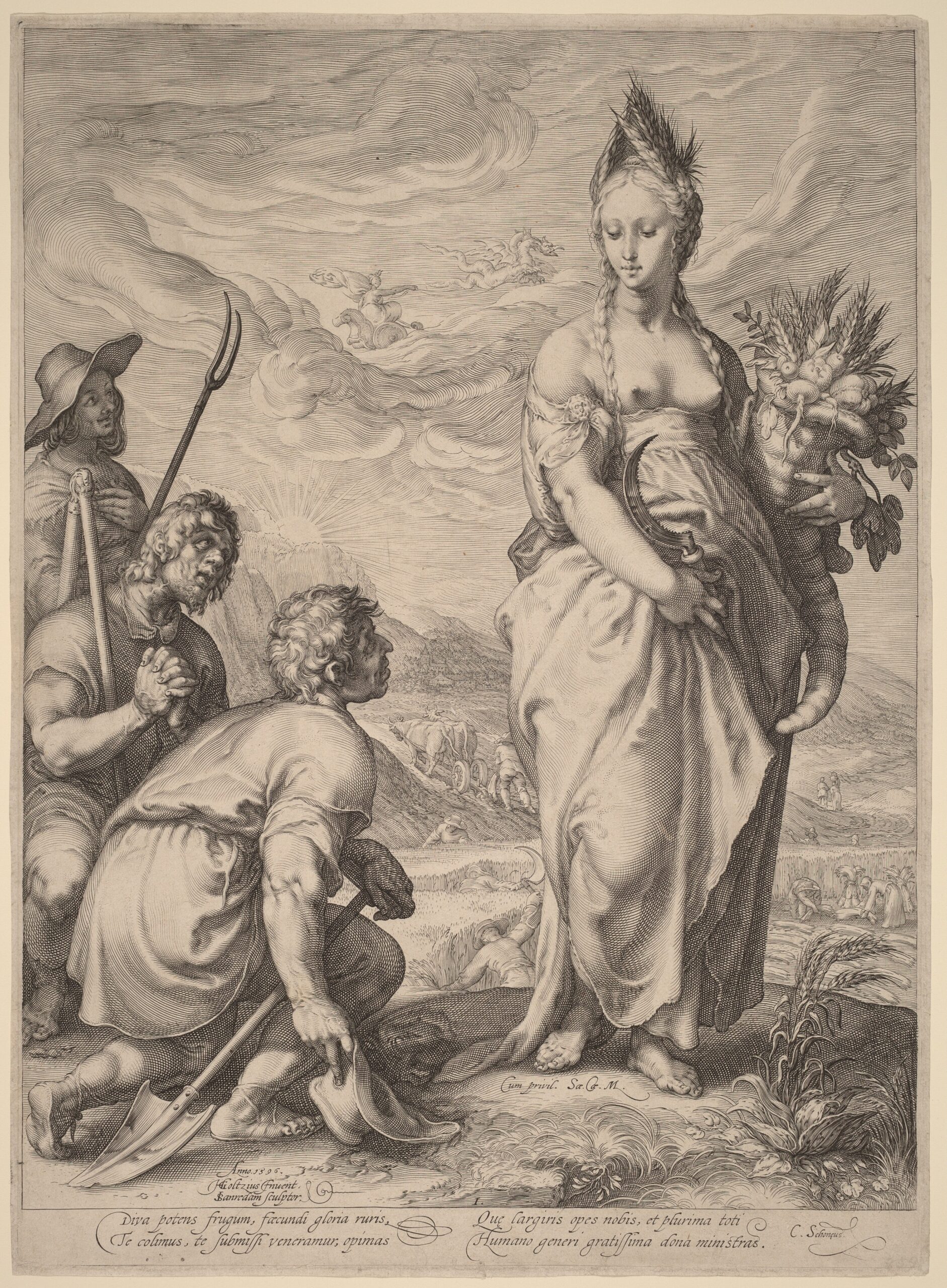
Jan Pietersz Saenredam
Engraving on paper, 44.4 x 32.3 cm | 17.5 x 12.7 in
Nationwide Gallery of Artwork
Love and Hedonism
Roman Bacchus, generally known as Dionysus in Greek mythology, was the god of the grape harvest, orchards, and fruit, and was stated to have created wine for his debaucherous events. Past this bucolic veneer, he was additionally the deity of madness, ritual insanity, and theatre. A number of the most well-known work on the planet depict the god of the grape harvest, resembling Caravaggio’s Bacchus and Titian’s Bacchus and Ariadne. His mythology crosses the fantastic line between pleasure and insanity, teetering between celebration and chaos. Worshipping Bacchus meant revelling in Bacchanalian feasts, the place crowds dined and drank themselves into ecstasy.
The origin of Bacchus’ wine is a darker story than the jovial persona he typically inhabits in artwork historical past. His lover was a satyr named Ampelos, who unwisely mocked the goddess Selene. In retaliation, she prompted him to be gored to dying by a bull, and from his blood, Bacchus created the primary grapevine – revealing a mournful root to his hedonism.
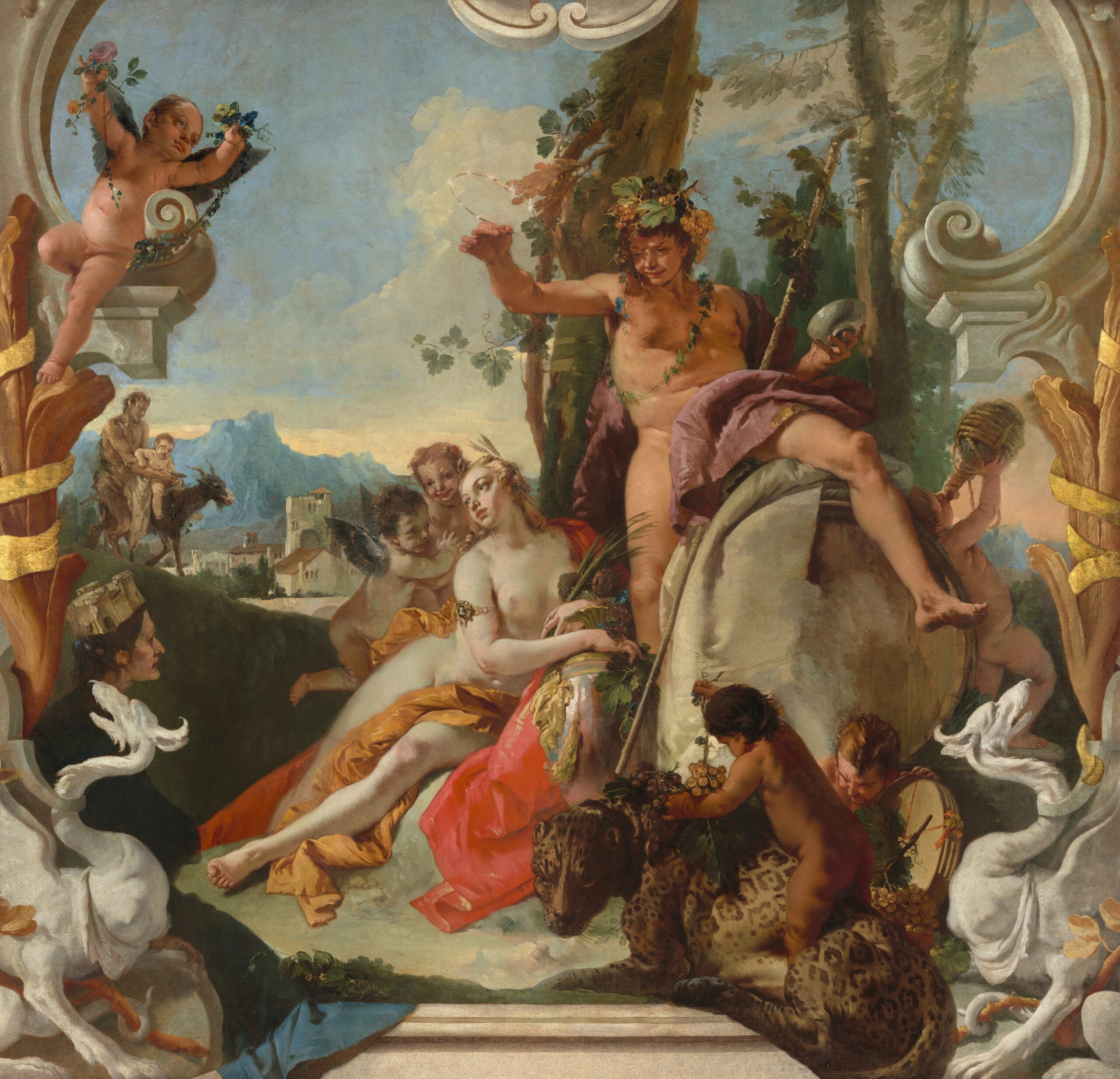
Giovanni Battista Tiepolo
Oil on canvas, 214 × 232.4 cm | 84.3 x 91.5 in
Nationwide Gallery of Artwork
In Seventeenth-century work, Bacchus is commonly depicted alongside Ceres, linking their shared symbolism of abundance from the earth. They’re generally depicted with Venus too, connecting the harvest and revelry with ardour and love, and making the trio a preferred topic for erotic artworks of the period. Hendrick Goltzius’ unimaginable ‘pen portray’, With out Ceres and Bacchus, Venus Would Freeze, is an uncommon mixed-media work through which ink drawing is mixed with oil paint on canvas. The work attracts us into an intimate huddle of the gods. The title alludes to the concept that the love and eroticism embodied by Venus can not exist with out the nourishment offered by the harvest of meals and wine, introduced by Ceres and Bacchus.
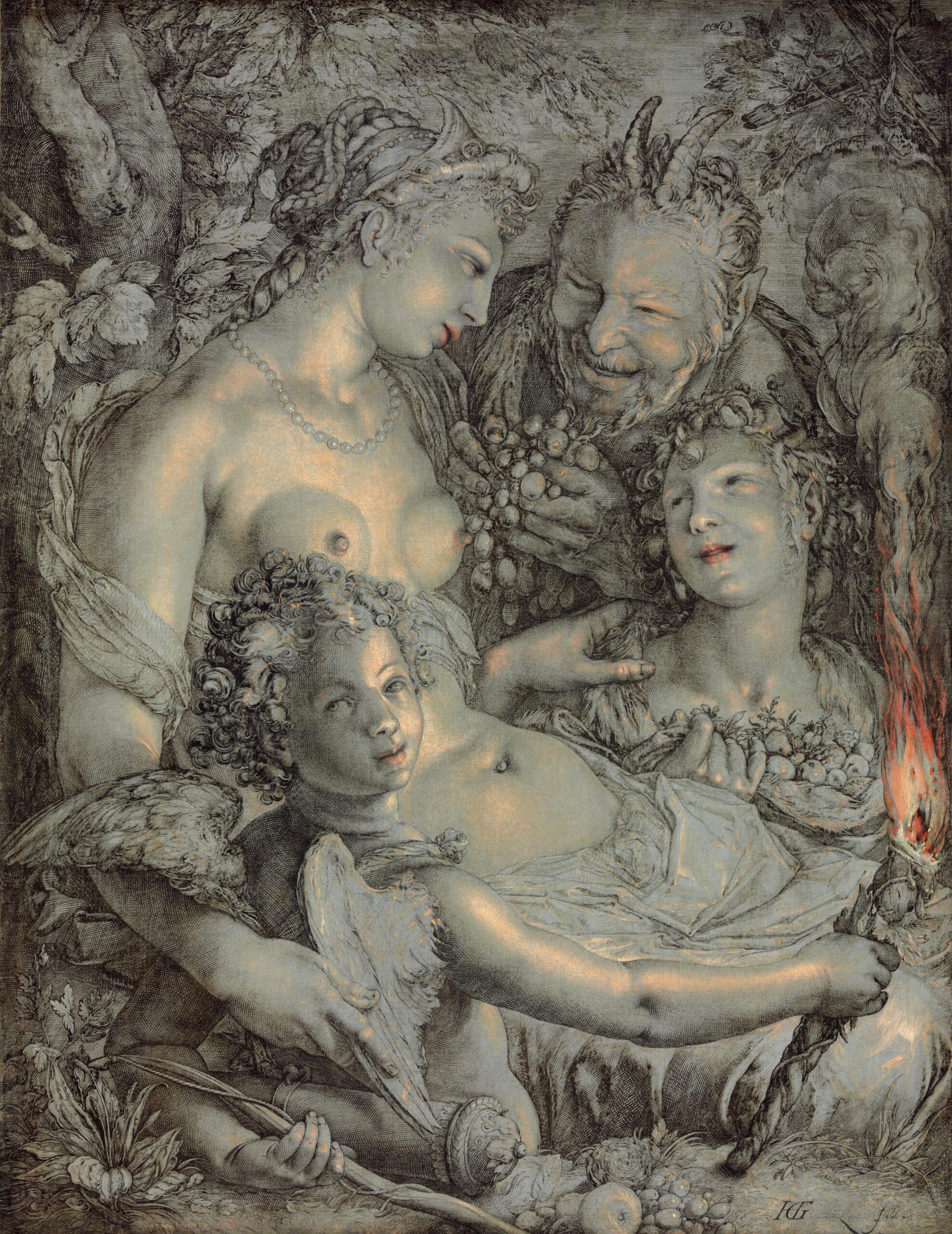
Hendrick Goltzius
Ink and oil on canvas, 105.1 × 80 cm | 41.4 x 31.5 in
Philadelphia Museum of Artwork
Business and Pleasure
A grasp of the Northern Renaissance, Pieter Bruegel the Elder was on the forefront of the event of secular artwork, making strides in depicting topics that departed from non secular themes. He was commissioned by an Antwerp service provider to color a sequence of six work depicting the altering seasons, together with The Harvesters. That is maybe probably the most well-known portray of the harvest, capturing labourers resting for lunch within the warmth of the late summer time solar, below the shade of a tree. Different figures stick with their work, with ladies within the background bent over, resembling the haystacks round them. The trail by the uncut crops winds away into the huge distance, suggesting that their labours will maintain folks in far corners of the nation, making Bruegel’s harvesters symbolic of significance of business to agricultural societies.
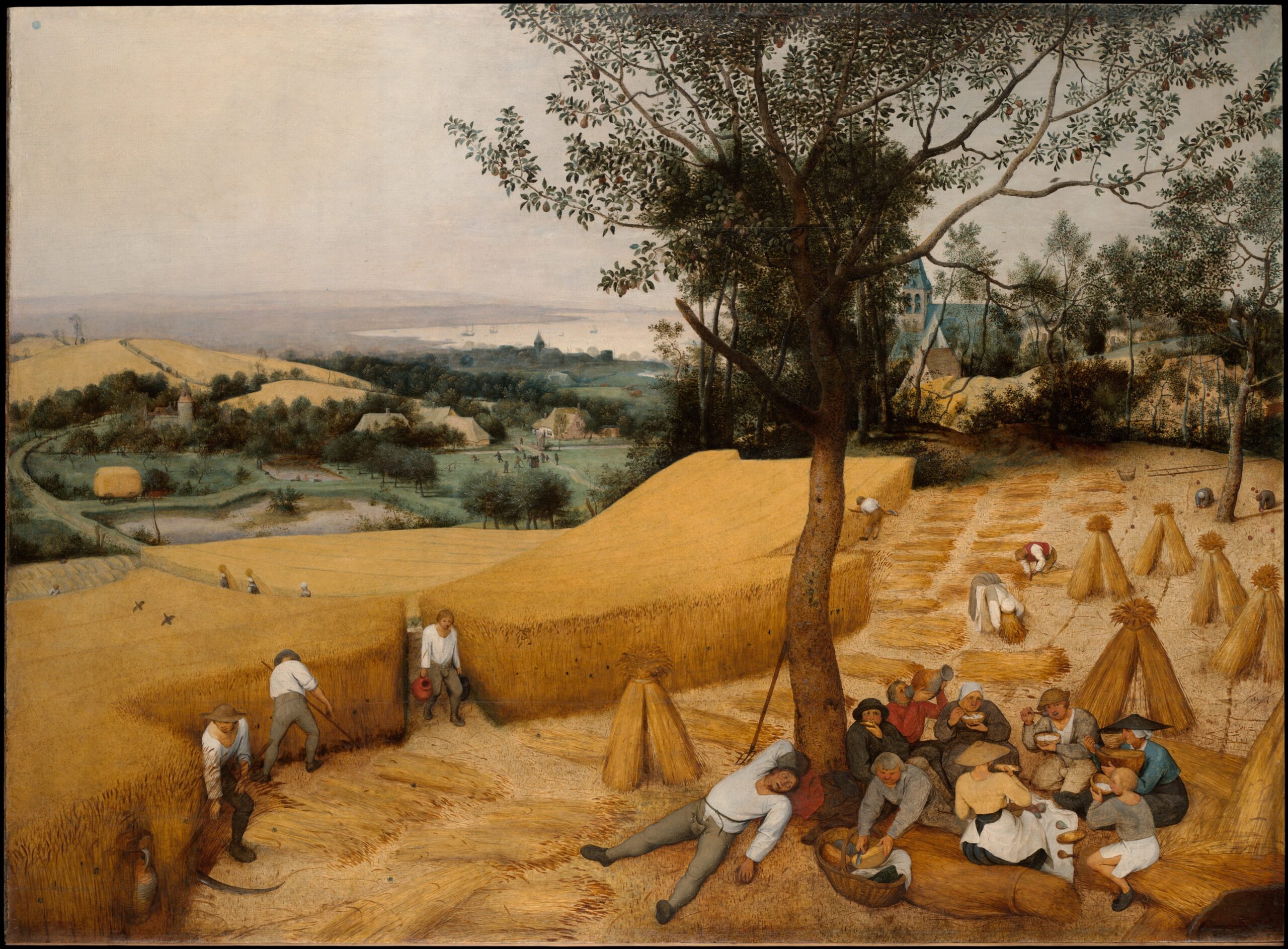
Pieter Bruegel the Elder
Oil on oak, 119 x 162 cm | 46.9 x 63.8 in
The Metropolitan Museum of Artwork
Bruegel’s employees are imperfect – they cross round a jug of beer or wine known as a kruik, whereas one man lies sprawled beneath the tree, asleep, handed out from exhaustion or intoxication – or possibly a mix of each. On the left of the foreground, we see one other kruik half-hidden amongst the wheat, stashed there by the employees, which a person with a scythe notices as he works. These particulars humanise the employees, making the portray sympathetic to their hardships whereas additionally depicting the small pleasures discovered amidst the arduous work, with out moralising judgement.
Advantage and Judgement
The Bible contains quite a few parables that use the harvest as a metaphor for religious doctrine, themes which might be mirrored all through Christian artwork. The Virgin Mary is typically depicted with sheaves of wheat, in reference to the bread of the Eucharist. These depictions echo the sooner iconography of Ceres and Demeter. A number of the many biblical parables centred on agriculture and the harvest embody the Parable of the Sower, the Parable of the Rising Seed, the Parable of the Wealthy Idiot, and the Parable of the Wheat and the Weeds.
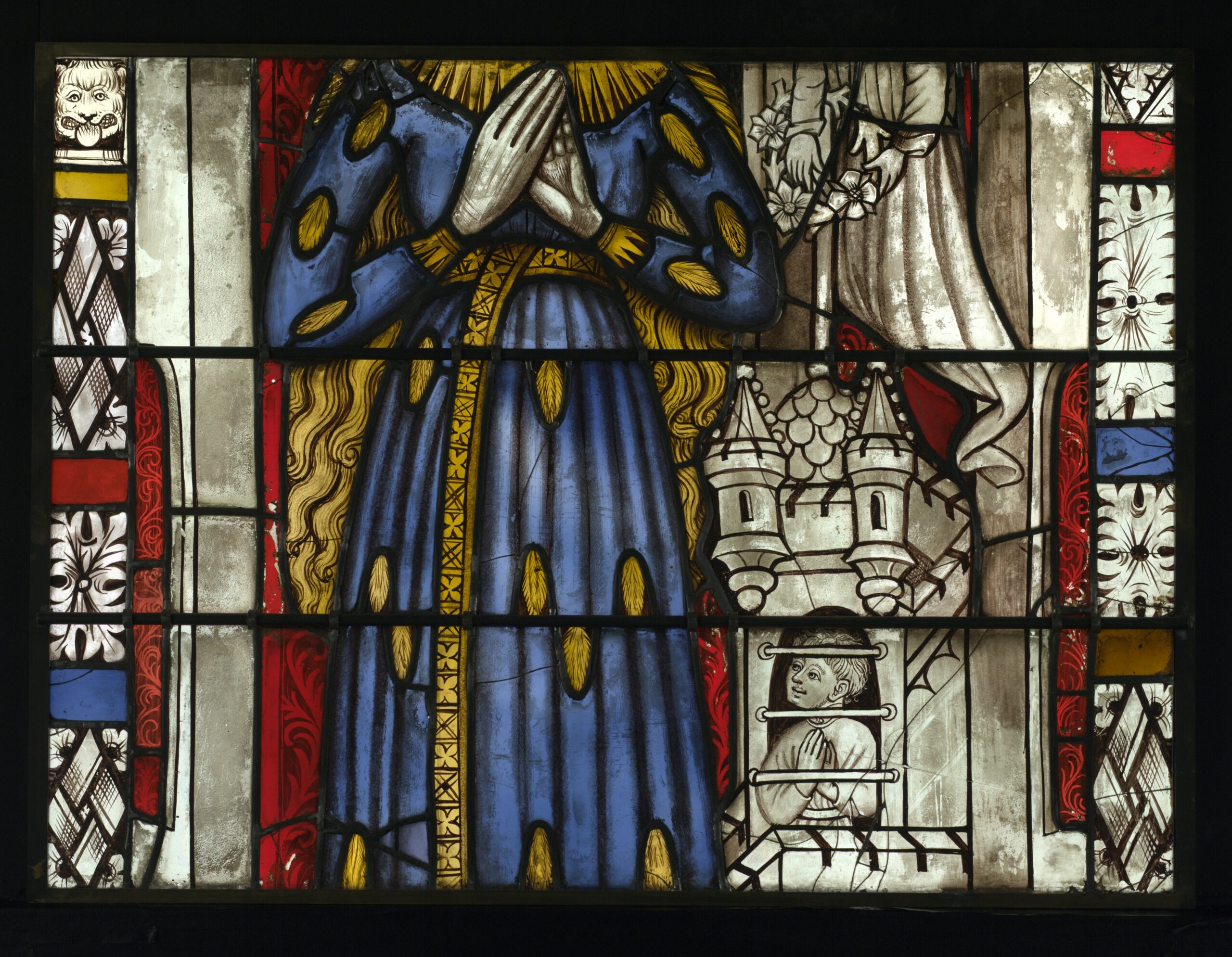
Center Rhine Valley, Germany
Pot-metal glass, white glass, vitreous paint, silver stain, 337.2 x 71.8 cm | 132.8 x 28.3 in
The Metropolitan Museum of Artwork
In the Parable of the Wheat and the Weeds within the Ebook of Matthew, a farmer sows his area with wheat, however below cowl of darkness, an enemy comes and sows weeds that resemble wheat within the early levels of progress amongst his crops. When the weeds develop and are recognised, the servants ask the farmer if they need to take away them. He says no, since pulling them out too quickly would uproot the wheat as effectively. On the finish of the season, the harvesters separate the wheat from the weeds, taking the wheat to be saved in a barn and the weeds to be burnt.
This parable refers to Judgement Day, instructing Christians to depart the judgement of people’ advantage to God. Like separating the wheat from the weeds, the blessed shall be taken to Heaven and evildoers despatched to Hell. The parable was depicted within the following portray by Isaac Claesz. van Swanenburg, with the God-like farmer swathed in crimson, ordering his angelic employees to hold out his determination, and the harvest of wheat symbolising the virtuous.
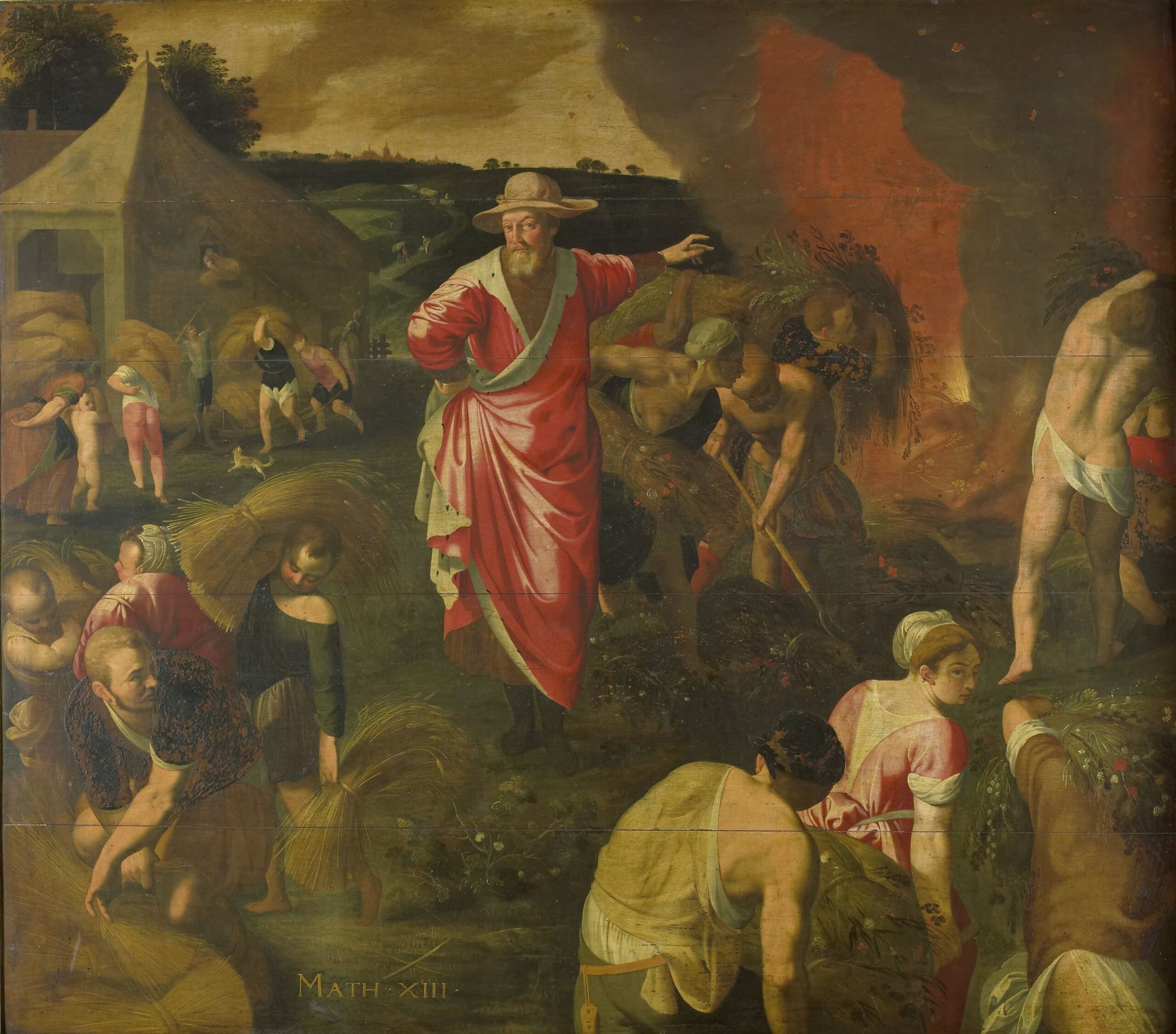
Attributed to Isaac Claesz. van Swanenburg
Oil on panel, 131 x 147 cm | 51.6 x 57.9 in
Rijksmuseum
Harvesting imagery, through which persons are ‘reaped’ like crops, additionally options within the apocalyptic Ebook of Revelation. In it, Jesus is instructed by an angel that the time has come to reap the ‘harvest of the earth’. Once more, the virtuous are represented by wheat, depicted right here within the medieval manuscript illustration The Harvest of the Earth. The passage reads:
‘Take your sickle and reap, as a result of the time to reap has come, for the harvest of the earth is ripe.’ So he who was seated on the cloud swung his sickle over the earth, and the earth was harvested’ (Revelation 14:15-17).
Within the subsequent passage, sinners are harvested, this time by the metaphor of accumulating grapes to press into wine, brutally condemning them to damnation, as they’re ‘trampled within the winepress outdoors town, and blood flowed out of the press’ (Revelation 14:19–20). In these works, the harvest symbolises each everlasting salvation and impending damnation.
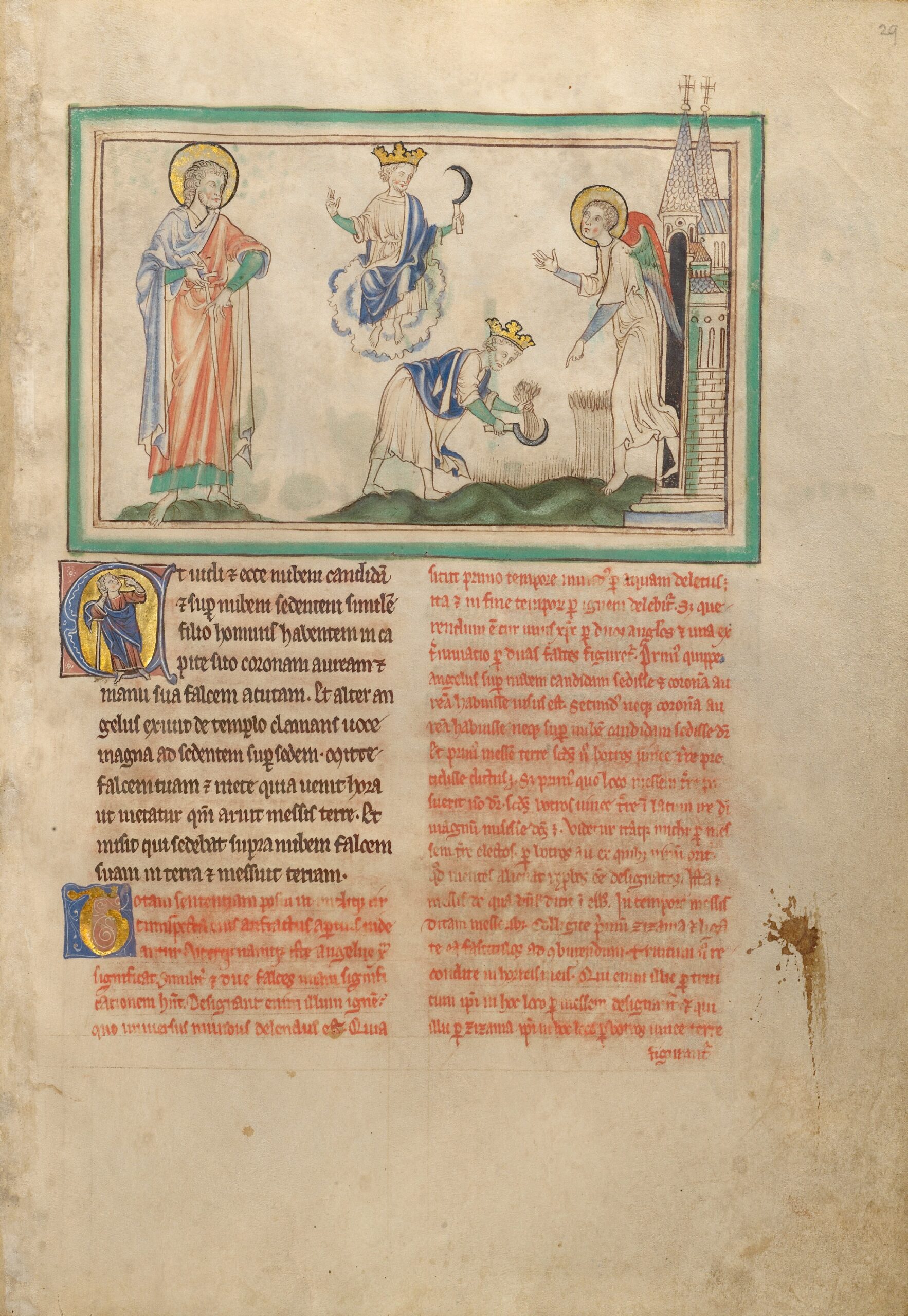
Unknown artist
Tempera colours, gold leaf, coloured washes, pen and ink, 31.9 × 22.5 cm | 12.6 x 8.9 in
Getty Museum
Seasons and New Beginnings
The Veteran in a New Discipline by Winslow Homer could initially look like a typical Realist pastoral scene, however it carries deeper social context and symbolism. Homer painted the work within the yr the American Civil Battle ended. Each the title and the military jacket on the bottom on the backside proper of the portray signify that this man has lately develop into a veteran of the battle. He works in a ‘new area’, which acknowledges his earlier one – the battlefield. His scythe now brings life by the harvest and the beginning of a brand new cycle, whereas additionally evoking the scythe of dying that he beforehand wielded. On this poignant work, Homer invokes the harvest as a reminder of the opportunity of renewal and new beginnings.
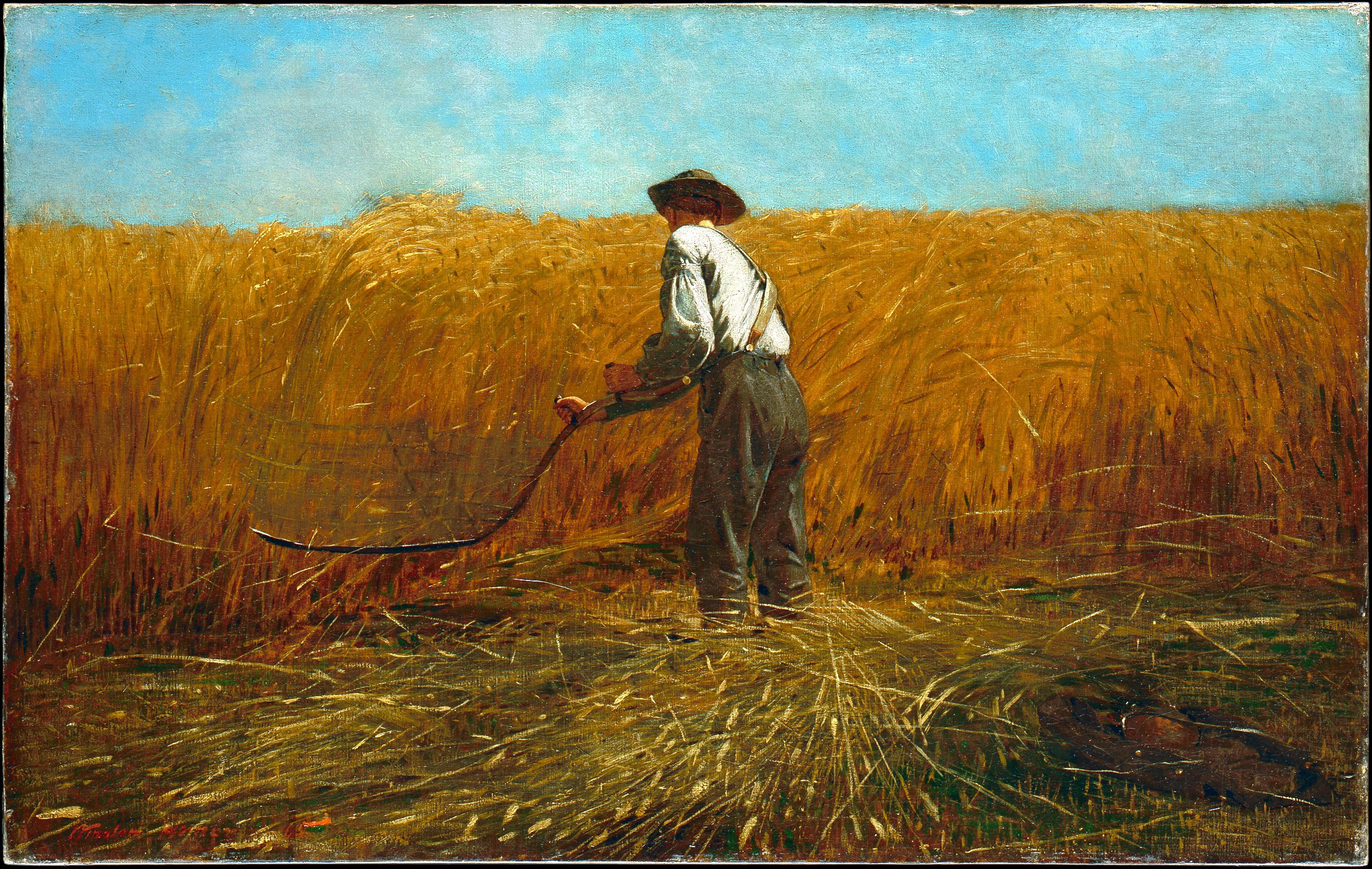
Winslow Homer
Oil on canvas, 61.3 x 96.8cm | 24.1 x 38.1 in
The Metropolitan Museum of Artwork
In distinction to Homer’s portray, which makes use of the harvest to indicate new hope after years of strife, different optimistic depictions of the harvest evoke a extra fast sense of time passing by the transience of climate. The Rain Bathe by Chintreuil depicts a storm transferring throughout an unlimited sky, with labourers pausing of their work to face over a bit boy, who lies jovially on the harvested crop. This second of humanity and childhood, linked with the altering climate, imbues the work with a reminder that troubles will cross, permitting the sunshine to interrupt by once more. This harvest additionally expresses the fleeting nature of human life, with survival tied to labour by the seasons, which can proceed lengthy after the employees’ time on earth.
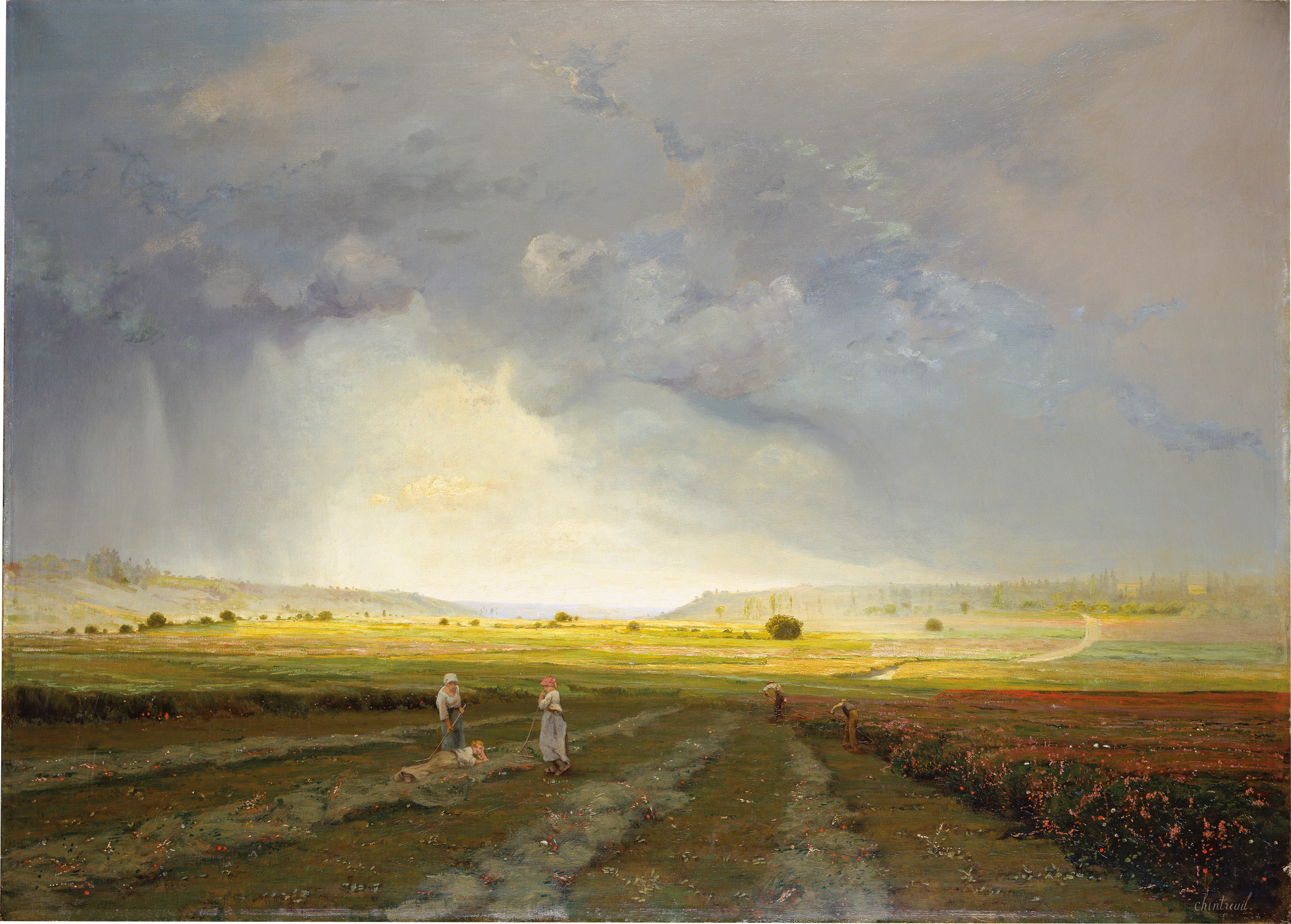
Antoine Chintreuil
Oil on canvas, 96 x 133.5 cm | 37.8 x 52.6 in
Staedel Museum
Claude Monet created a sequence of 25 work of haystacks, charting the altering seasons from the tip of summer time in 1890 till the next spring. They seize the haystacks at totally different instances of day, in various qualities of sunshine and climate situations. Broadly, the sequence symbolises the passage of time. His meditative method to reinterpreting the identical topic makes these works an vital precursor to abstraction, for the reason that topic of the haystacks issues lower than the location of sunshine and color throughout them.
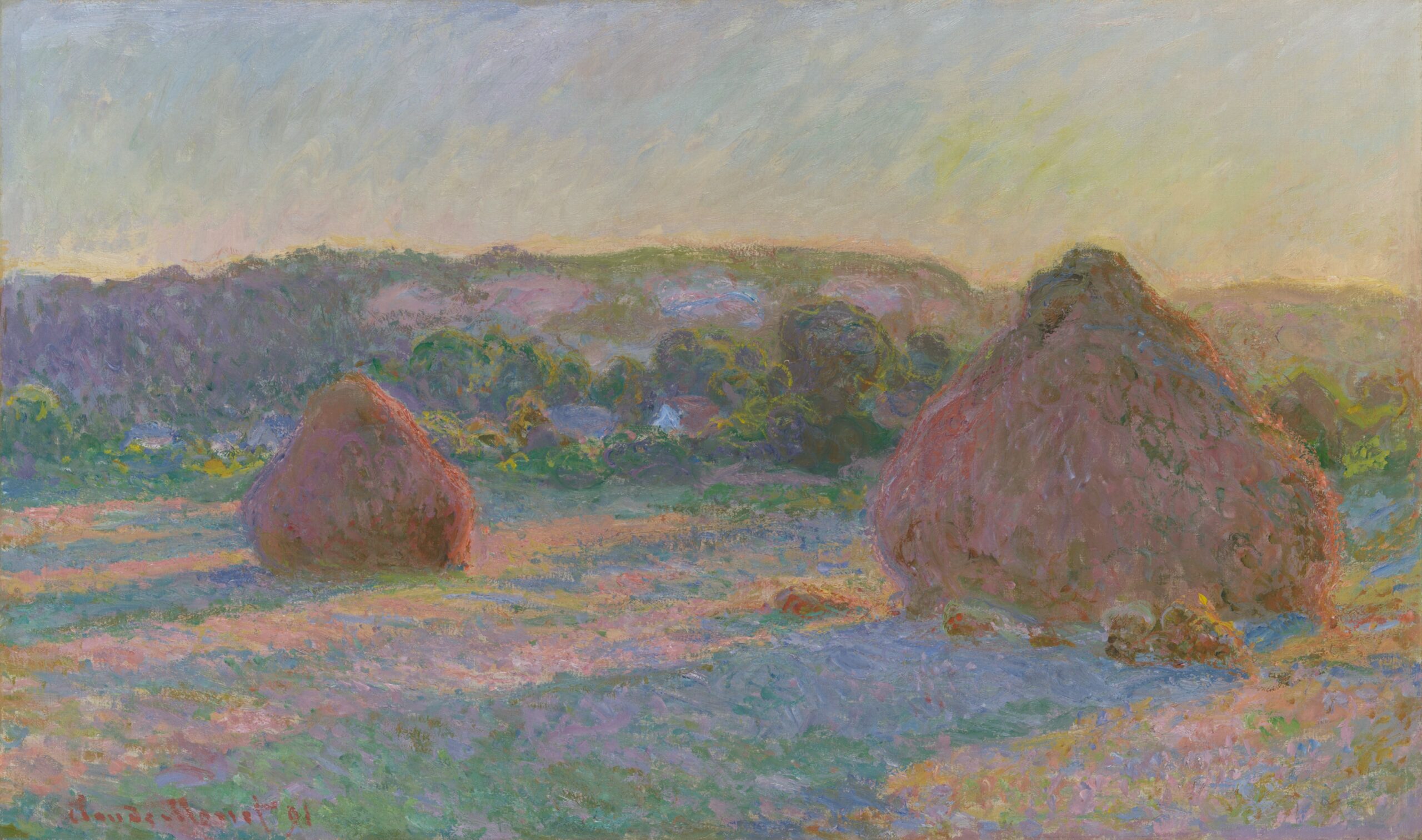
Claude Monet
Oil on canvas, 60 x 100.5 cm | 23.6 x 39.6 in
Artwork Institute of Chicago
Utopia
Utopian harvests impressed by the opening passage of Ovid’s Metamorphoses will be discovered all through artwork historical past. The passage describes ‘The Golden Age’ on Earth, previous the successively worsening ages of Silver, Bronze, and Iron. The story particulars how folks of the Golden Age indulged in bountiful assets, dwelling in concord with nature in a time of peace, with out having to labour for something. Alongside the bucolic pleasure of the topic, it additionally offered artists with the right alternative to create advanced determine compositions. The passage that impressed them reads:
‘The earth herself additionally, freely, with out the scars of ploughs, untouched by hoes, produced all the things from herself. (…) Spring was everlasting, and delicate breezes caressed with heat air the flowers that grew with out being seeded. Then the untilled earth gave of its produce and, while not having renewal, the fields whitened with heavy ears of corn. Generally rivers of milk flowed, generally streams of nectar, and golden honey trickled from the inexperienced holm oak.’
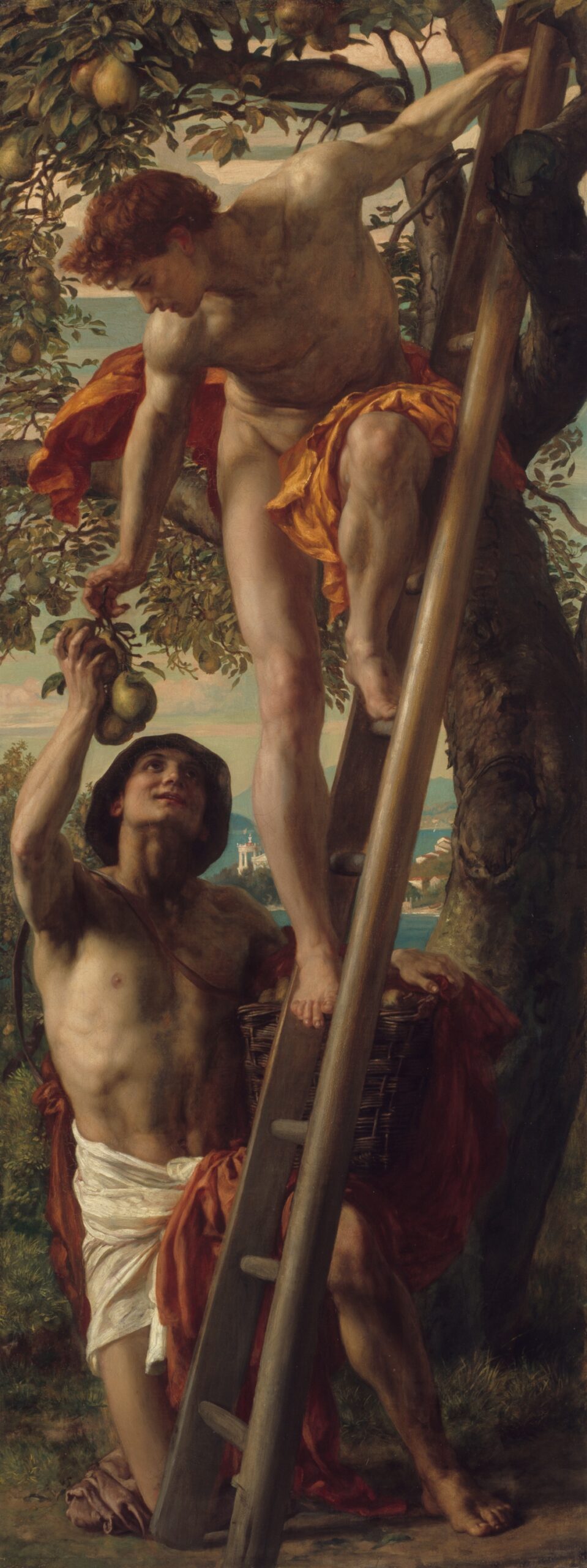
Edward John Poynter
Oil on canvas, 137.2 × 53.4 cm | 54 x 21 in
Artwork Institute of Chicago
The Dutch Mannerist Wtewael painted his personal advanced miniature model of the passage, through which nude figures of all ages jubilantly collect to choose fruit from the luxurious forest round them. We see sensual figures scrambling by the branches all through the portray, greedy for the good grapes and apples. Within the high proper nook, a goat even pushes its means upwards to succeed in the fruit earlier than the person under can. This scene transforms the harvest right into a utopian imaginative and prescient, earlier than humankind and the gods destroyed it by their actions. Imagining a harvest with out the necessity for cultivation or arduous labour appealed to viewers who have been conscious about the hardships of the harvest in actuality.
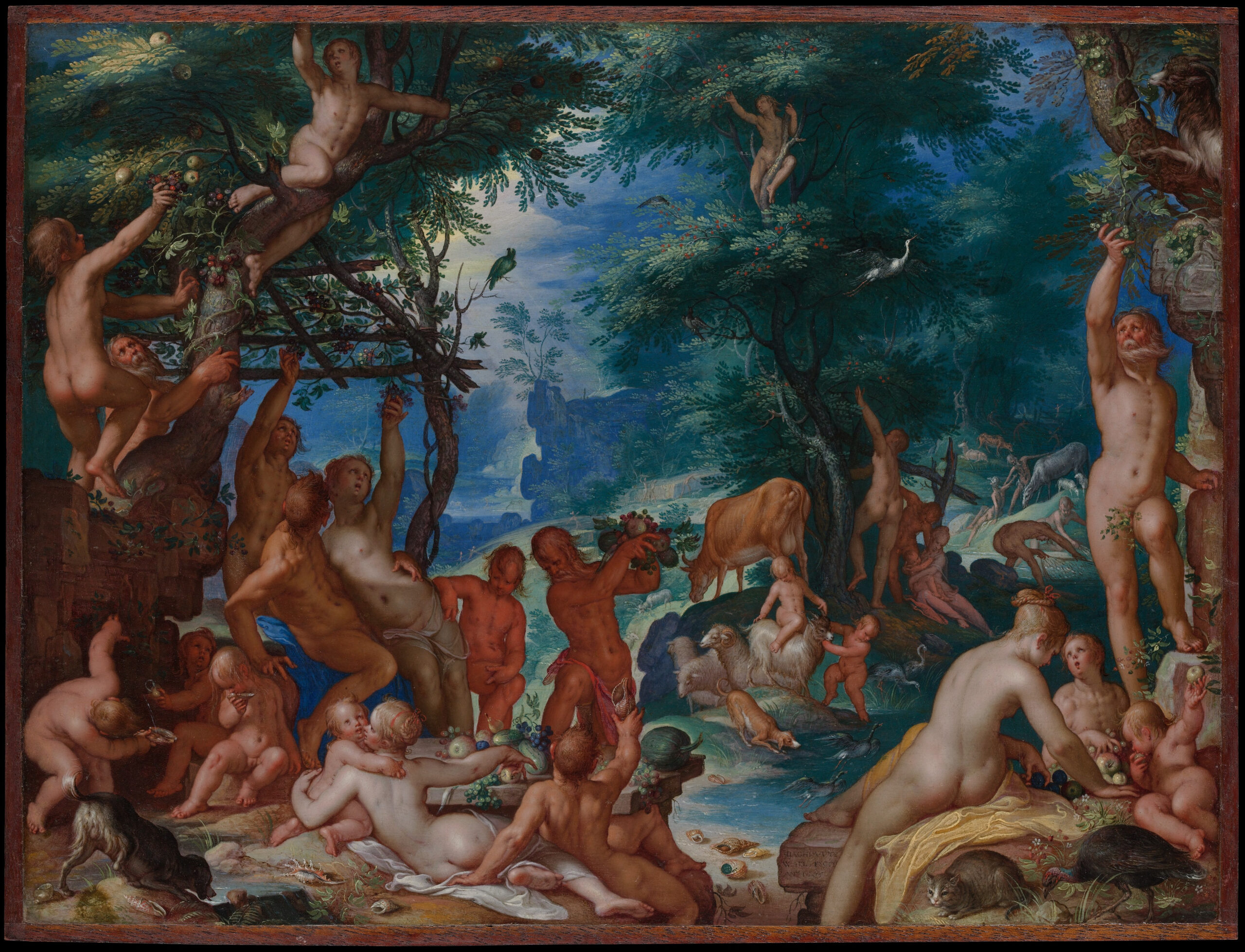
Joachim Wtewael
Oil on copper, 22.5 x 30.5 cm | 8.9 x 12 in
The Metropolitan Museum of Artwork
The Harvest – Artwork Immediate
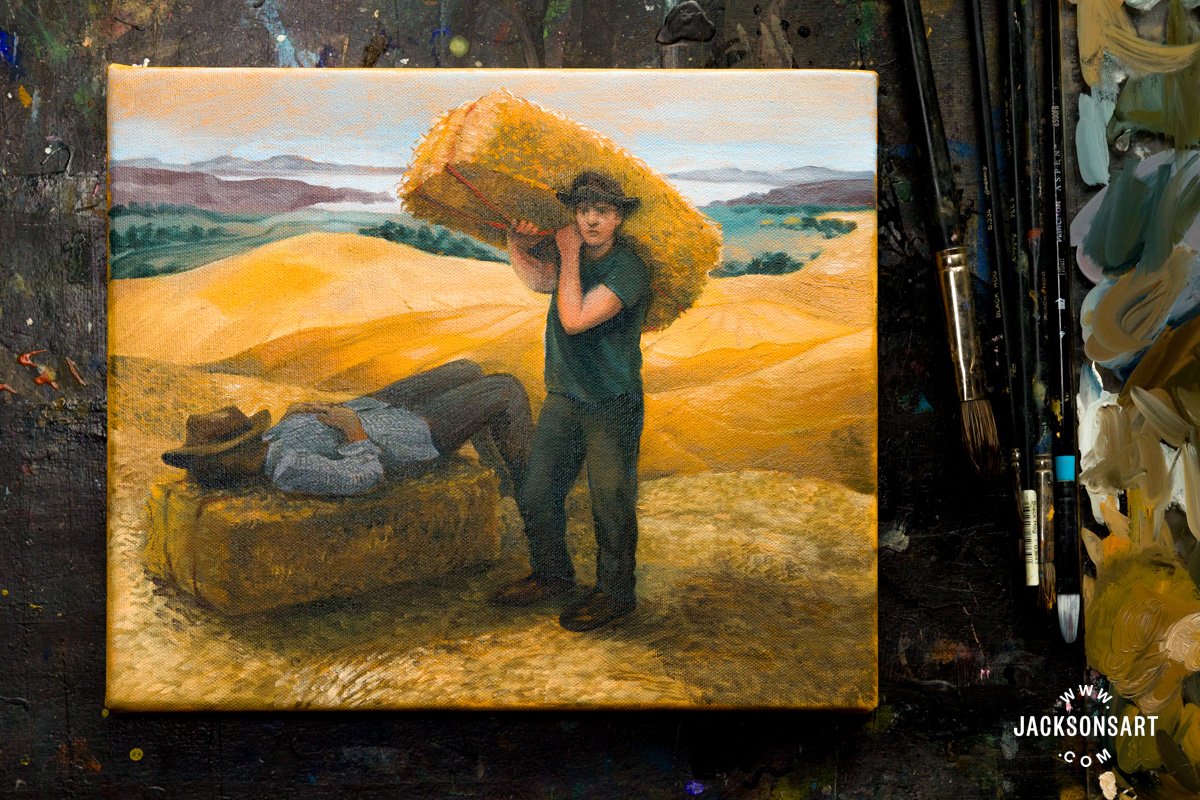
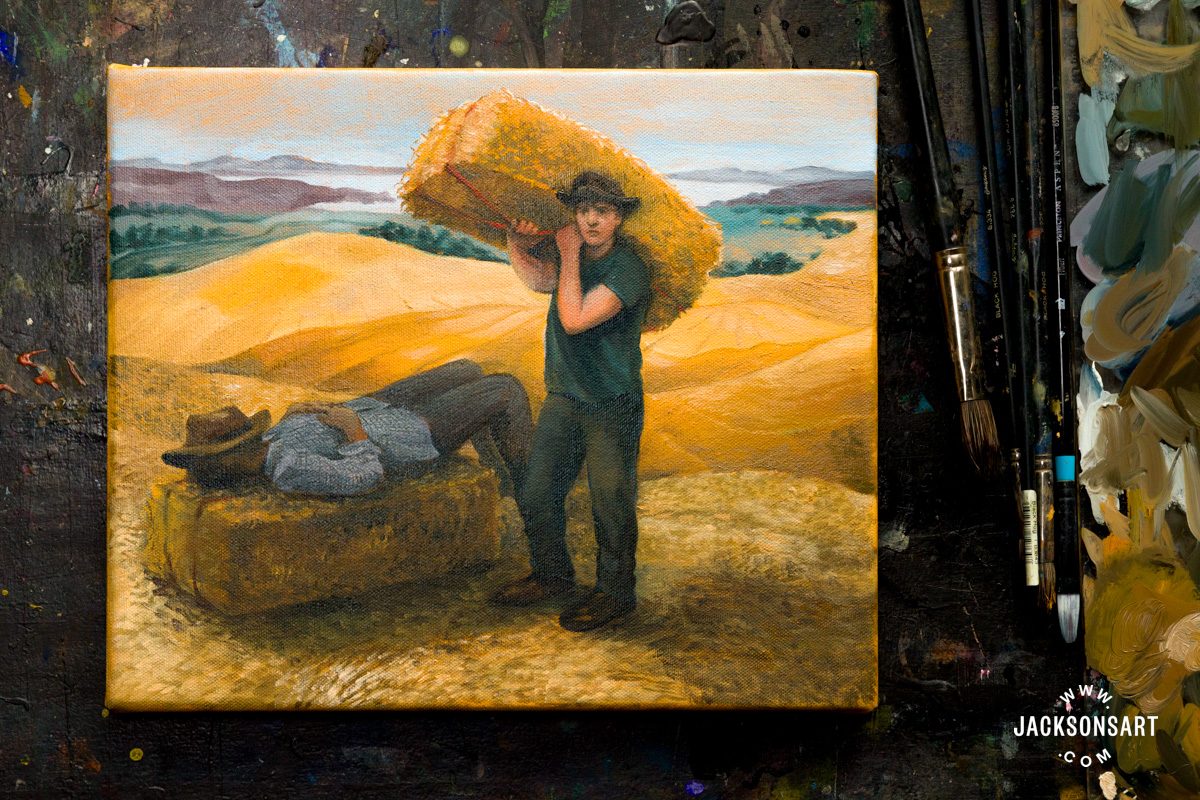
For this artwork immediate, I used to be impressed by Bruegel’s The Harvesters, which depicts farm employees stopping to relaxation amidst the harvest. I made a decision to color my figures in modern costume, whereas sustaining the unique mixture of labour and relaxation towards a sprawling panorama.
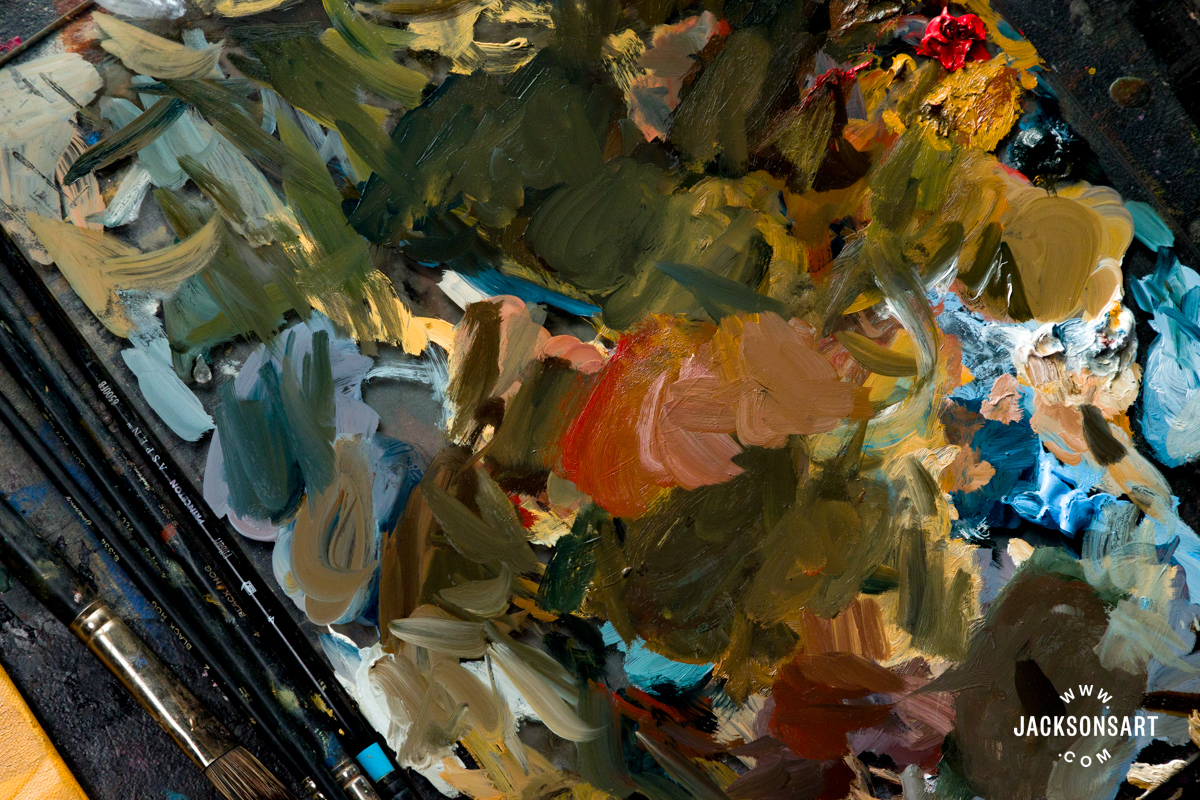
For this artwork immediate you’ll want:
A Jackson’s primed stretched cotton canvas
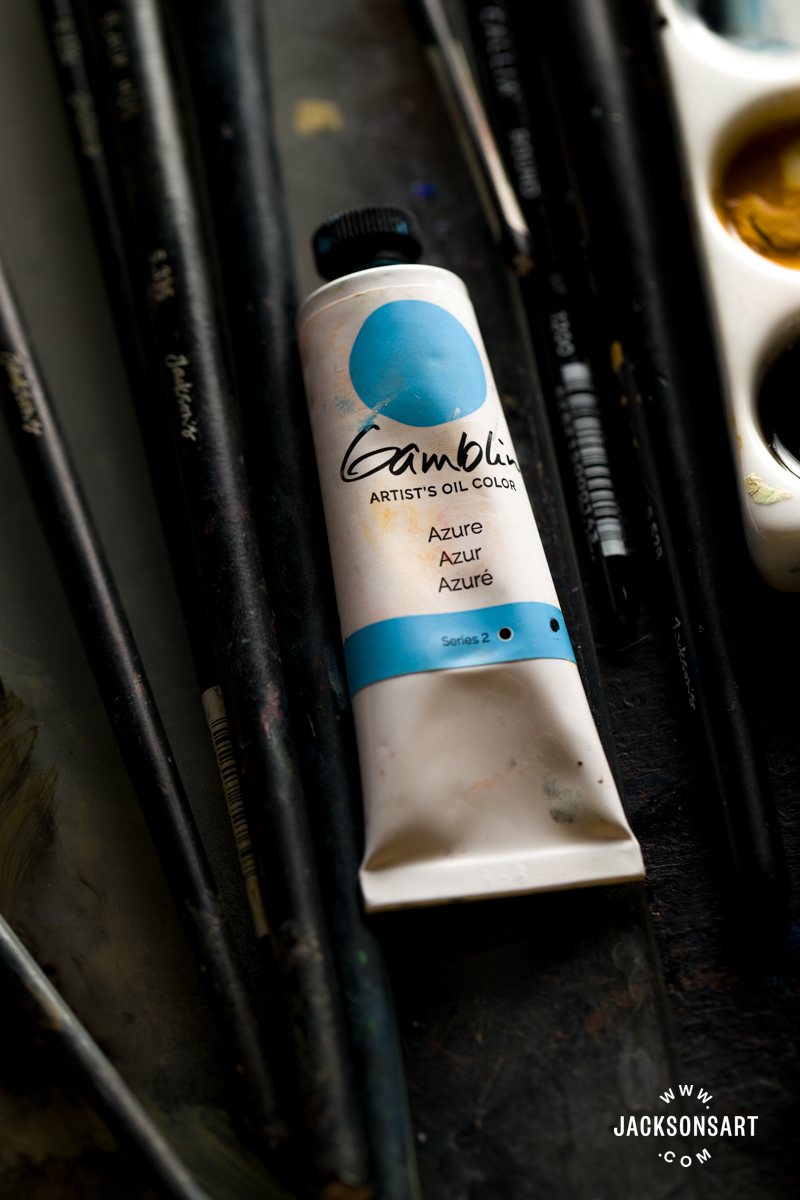
A choice of oil paints – I used Yellow Ochre, Uncooked Umber, Burnt Sienna, Azure, Titanium White, Cadmium Pink, Alizarin Crimson, and Indigo
A choice of oil brushes
A jar for oil medium – I used Langridge Solvent 75 and Jackson’s Refined Linseed Oil
A palette
To start my portray, I utilized an acrylic floor to the canvas utilizing Yellow Ochre. This introduced rapid heat and a golden hue to all the subsequent layers of paint.
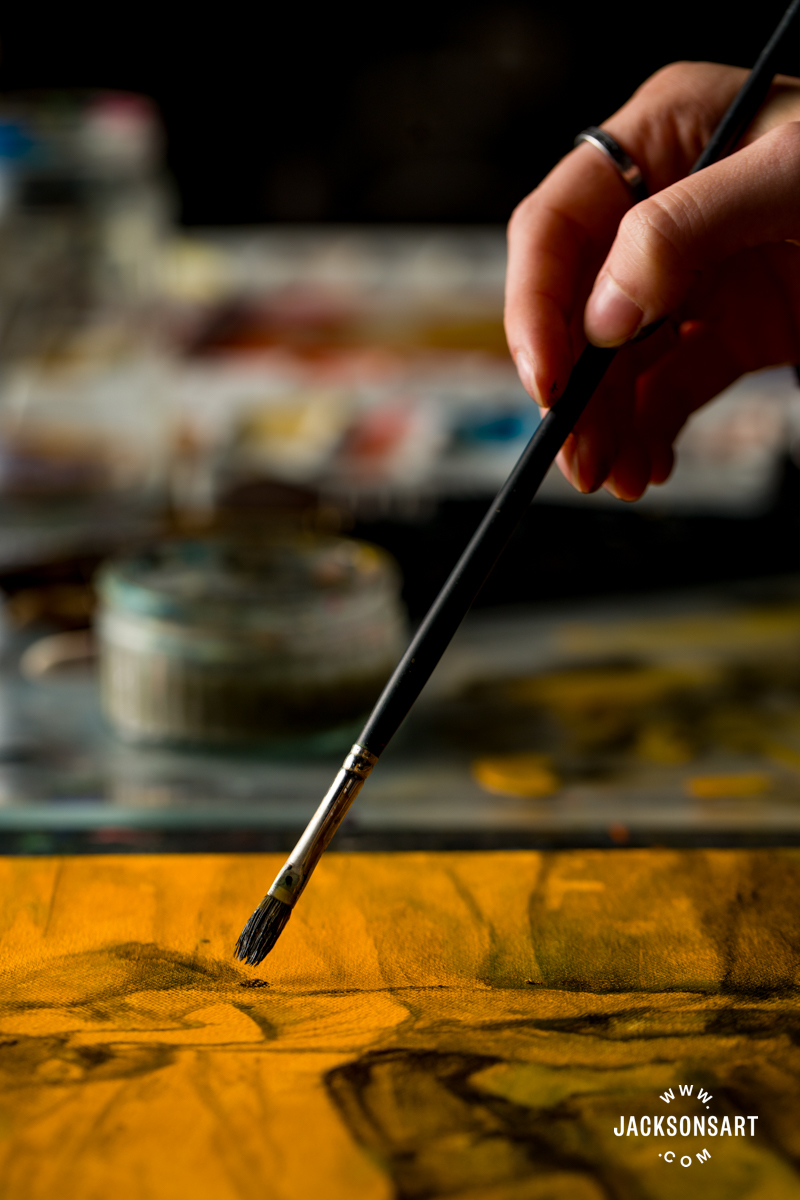
Subsequent, I added an underpainting to determine the composition of the work and placement of my figures, utilizing a mix of Uncooked Umber and Indigo. I added one man holding a straw bale on his shoulder, and one other napping on high of 1.
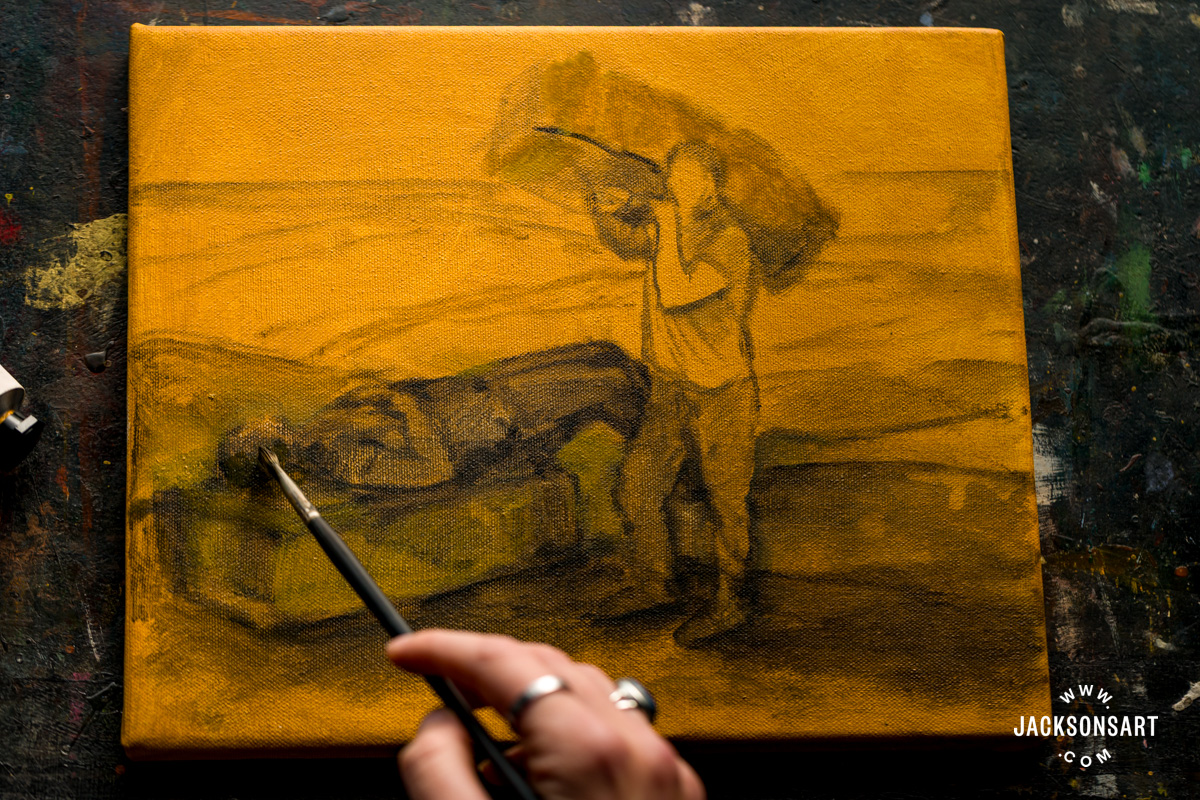
To start the portray I instantly established the crisp blue of the sky and water within the distance, to make sure they weren’t muddied by subsequent layers of paint.
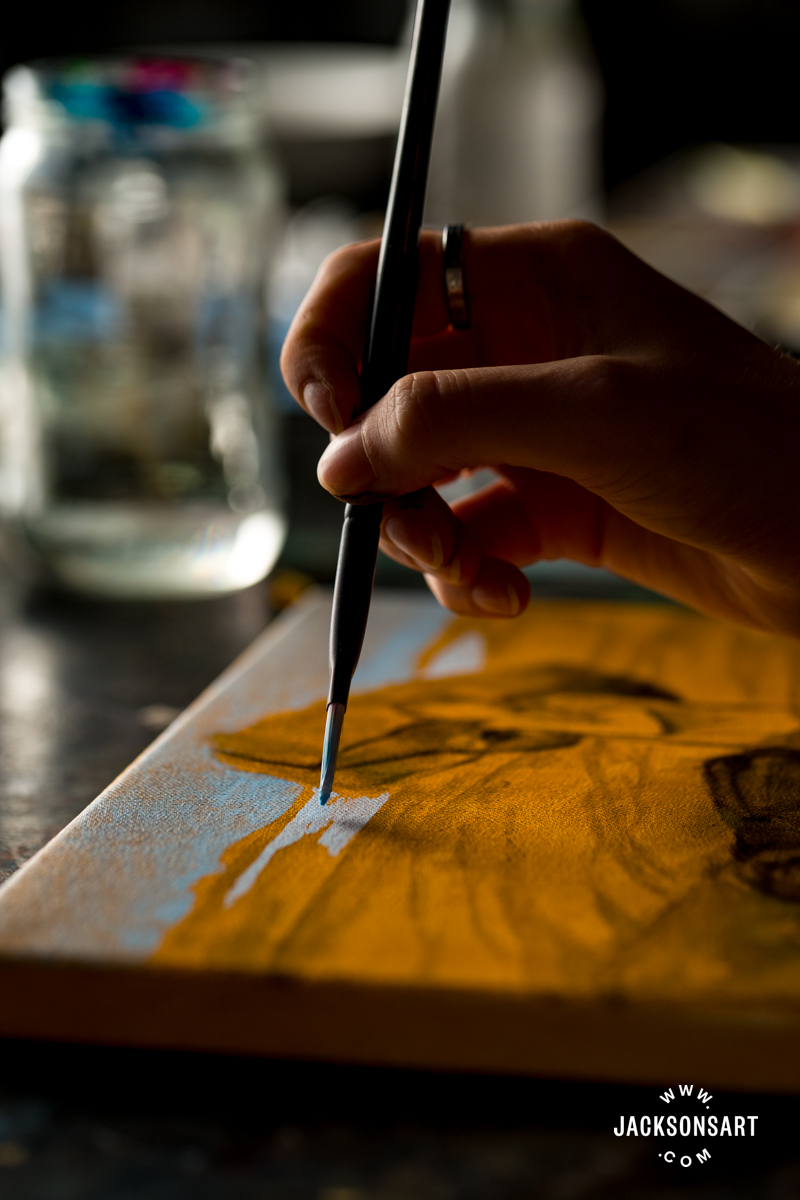
I steadily blocked within the portray, establishing areas of broad tone, and creating the undulating type of the fields past.
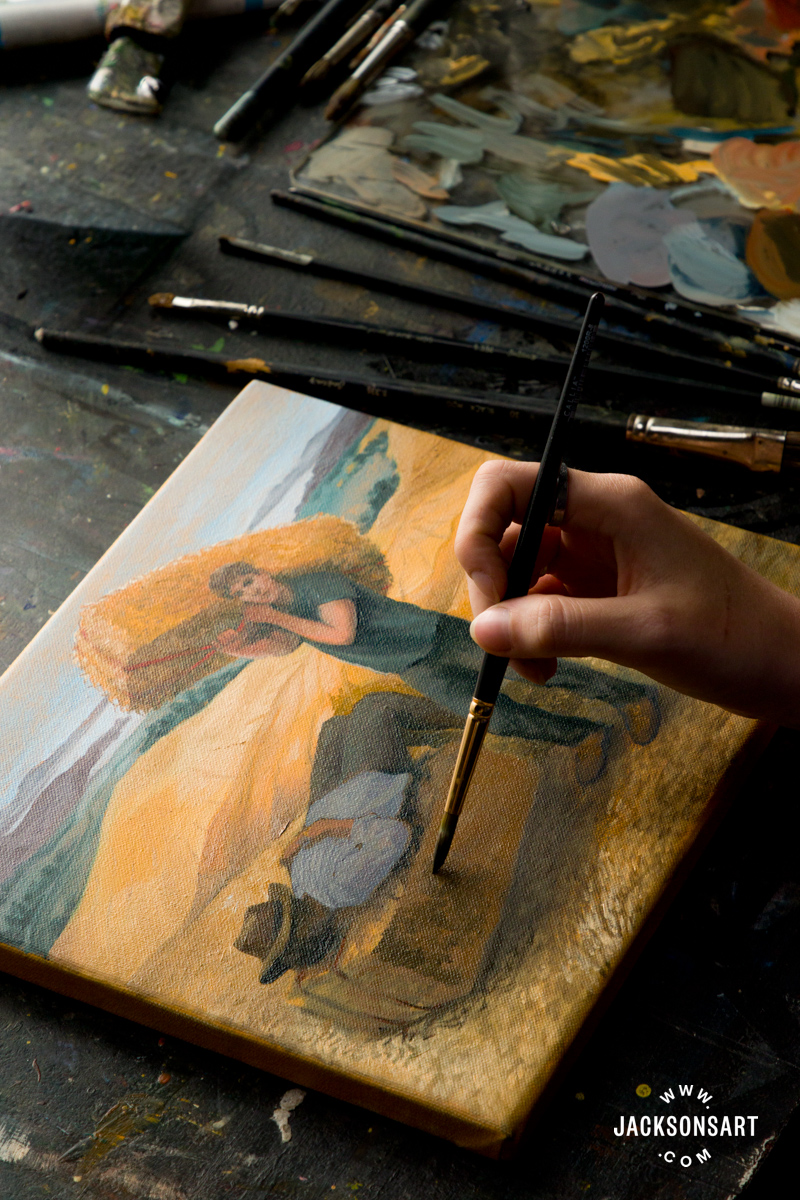
To finish the portray, I added particulars like the feel of the tough reduce floor, the stalks of the straw bales, and folds of my figures’ garments.
Additional Studying
Behind the Motion: Northern Renaissance
Introducing 24 Modern Oil Colors From Gamblin
Artwork By way of Symbols: Bathers
Behind the Motion: the Brotherhood of ‘the Ancients’
Store Artwork Supplies on jacksonsart.com