
“Style — the mouth’s response to the sensation of eating and drinking — is an odd and complex and complicated factor,” writes New York Instances meals editor Craig Claiborne. “I’m convinced that there are a multitude of people (Americans, mostly, to guage by the people who purchase TV dinners and frozen pizzas) who haven’t any style whatsoever.” That column was published nearly actually 50 years in the past, however even at that time, such convenience-oriented meals products had already loved prominence in American life for twenty years. Although it might exhaustingly have made a dent within the popularity of TV dinners, Claiborne’s typically waspish apart did draw a letter of objection from one Rosalie Levine of Lakewooden, California.
“I reside alone, I need to control my weight. I’m not a talented prepare dinner,” she writes. The TV dinner’s worth “cannot possibly be guesstered”; what’s extra, “every oven-ready dinner takes solely half an hour’s price of gasoline to prepare, and there are not any pots or pans to wash up afterward.” Whereas none of those advantages have been accidental, the oft-told story of the concept’s emergence begins with a corpocharge crisis.
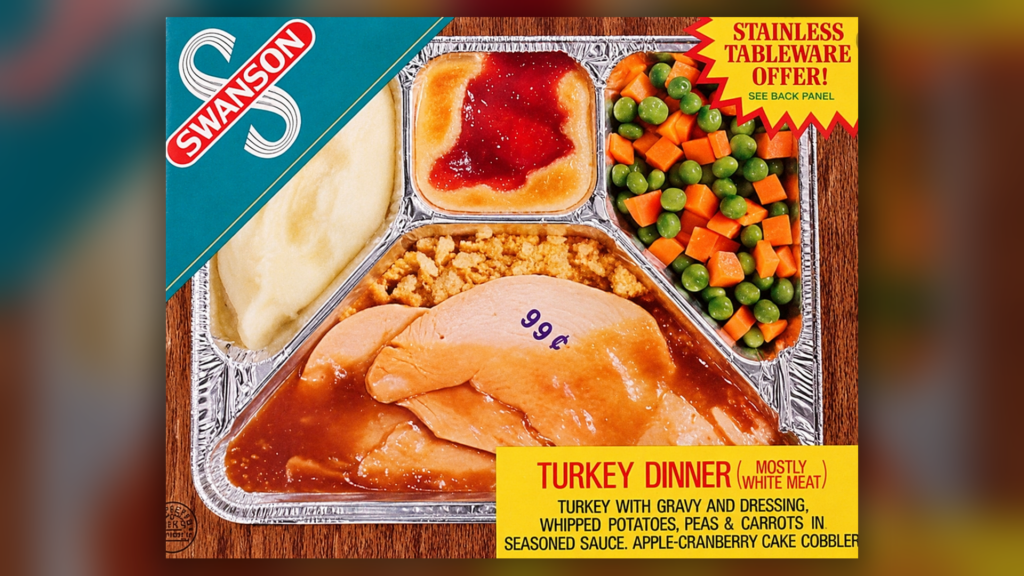
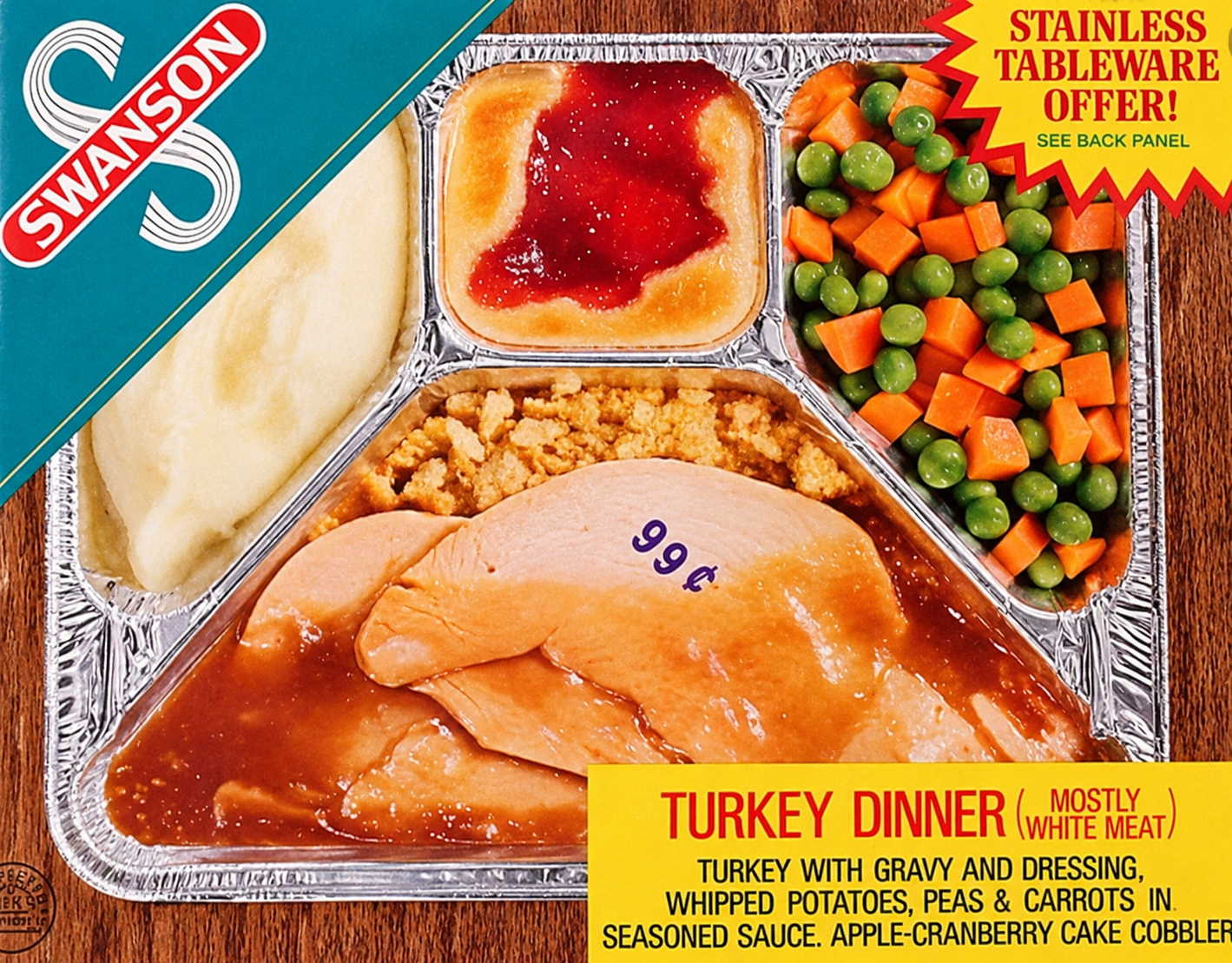
“In 1953, someone at Swanson colossally miscalculated the level of the American urge for food for Thanksgiving turkey, leaving the company with some 260 tons of frozen birds,” as Smithsonian.com’s Owen Edwards tells it. “Impressed by the trays of pre-prepared meals served on airtraces,” Swanson gross salesman Gerry Thomas set the machinery in movement to package the unwanted meat with gravy and sides like cornbread and candy potatoes, prepared for inventorying in America’s frozen-food aisles.
The following 12 months, Swanson bought ten million such “TV dinners,” a reputation attributed to each the form of the fieldes and the type of entertainment families have a tendencyed to get pleasure from whereas eating the meals within. “In 1950, solely 9 percent of U.S. homeholds had television units — however by 1955, the number had risen to greater than 64 percent, and by 1960, to greater than 87 percent,” writes Kovie Biakolo in a more moderen Smithsonian piece. (Among the many Smithsonian Institution’s maintainings, incidentally, is an original Swanson TV dinner tray.) Another breakby way of got here with the introduction of microwave-safe trays, delivering complete preparation time beneath ten minutes. During the COVID-19 pandemic, Americans rekindled their love affair with frozen meals, “spending close toly 50 percent extra on them in April 2020 over April 2019.”
The place holiday and commercial lore intersect, the main points are inclined to get complicated. Swanson’s TV dinner did have its precedents: the core technology for quick-freezing packaged meals was invented over a century in the past by entrepreneur Clarence Chickenseye (he of the Birds Eye peas Edwards remembers as “little cryogenic miracles”), and within the late Forties, different companies deliberate or tryed to deliver frozen meals to market beneath manufacturers like Strato-Plates, FridgiDinners, and One-Eyed Eskimo. None of these names tapped into the technology transkinding not simply American mass culture, but additionally the American lifestyle. Within the fifties, associations with television (and, certainly, with air travel) automotiveried a sort of sophistication they certainly don’t have right now. Perhaps Craig Claiborne could be happy that Americans never fairly settle fored microwaved TV dinners as a substitute for the Thanksgiving meal; what he’d consider the meals they order by way of their apps is another matter completely.
Related Content:
Learn 1,000+ Thanksgiving Books Free on the Interinternet Archive
Thanksgiving Menu on the Plaza Lodge in New York Metropolis (1899)
F. Scott Fitzgerald’s 13 Ideas for What to Do with Your Leftover Thanksgiving Turkey
How Eating Kentucky Fried Chicken Grew to become a Christmas Tradition in Japan
An Animation of Orson Welles’ Well-known Frozen Peas Rant
Primarily based in Seoul, Colin Marshall writes and broadcasts on cities, language, and culture. He’s the writer of the newsletter Books on Cities in addition to the books 한국 요약 금지 (No Summarizing Korea) and Korean Newtro. Follow him on the social internetwork formerly often called Twitter at @colinmarshall.