

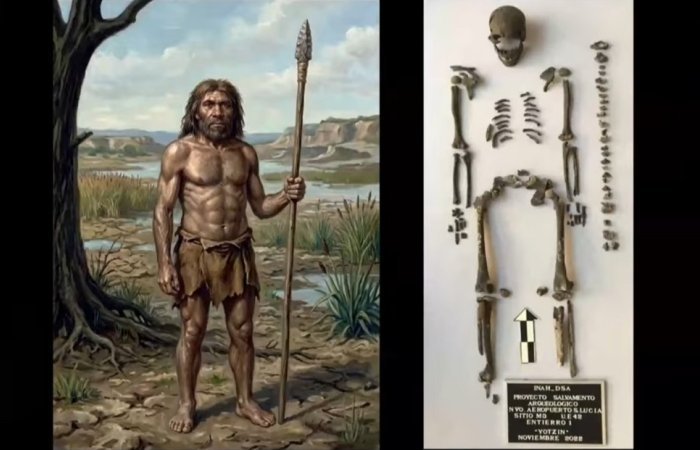
Conny Waters – AncientPages.com – Radiocarbon and isotopic relationship have confirmed that an historical human skeleton unearthed throughout the development of Mexico’s Felipe Ángeles Worldwide Airport (AIFA) is roughly 13,000 years previous, putting the person among the many earliest identified inhabitants of the Americas.
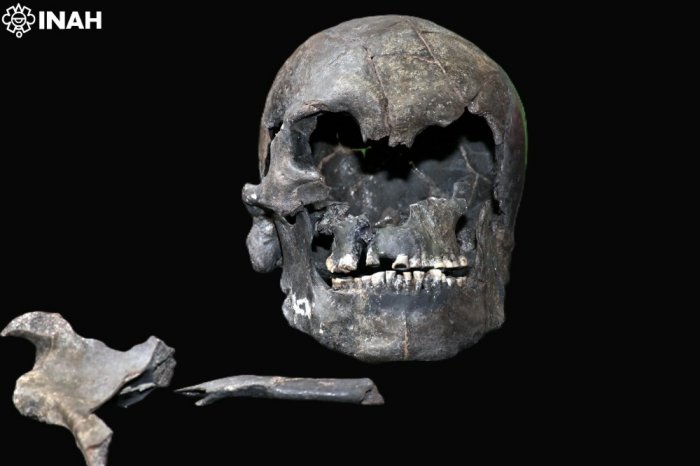
Courting locations the Yotzin human skeleton at 13,000 years previous. Photograph: Melitón Tapia, INAH.
Based on an announcement by Mexico’s Nationwide Institute of Anthropology and Historical past (INAH), the stays—named Yotzin, that means “distinctive” in Nahuatl—date again to the transition between the Late Pleistocene and Early Holocene epochs. The relationship locations Yotzin among the many 23 oldest human specimens ever recovered within the Basin of Mexico.
Two impartial laboratory analyses established the skeleton’s age utilizing a pattern extracted from its third molar. Testing on endogenous collagen carried out by ISOTOPIQ AGING INC. in Belgium yielded a calibrated vary of 13,087 to 12,987 years earlier than current (BP), whereas bioapatite evaluation on the College of Georgia’s Middle for Utilized Isotope Research in america produced a spread of 12,050 to 11,700 years BP.
An Sudden Discovery Amongst Ice Age Megafauna
Archaeologist Israel Peña initially found the skeleton in 2021 within the northwestern sector of the airport grounds in Santa Lucía, State of Mexico. The bones have been embedded in swampy, silty sediments often known as Solonchak, alongside the fossilized stays of Late Pleistocene megafauna, together with mammoths and prehistoric camels. Like the encompassing animal fossils, Yotzin’s bones had turned a darkish brown or black hue over millennia.
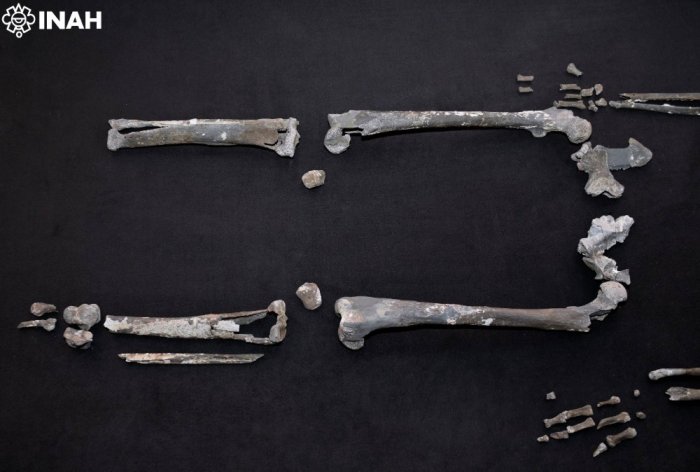
His strong bones point out that he was a hunter, 1.75 meters tall, accustomed to strolling lengthy distances and fascinating in fight. Photograph by Melitón Tapia, INAH.
Peña initially mistook the massive, heavy bones for these of a prehistoric camel earlier than increasing the excavation and realizing they have been human. Beneath the route of challenge lead Rubén Manzanilla, the group carried out a managed excavation—documenting stratigraphy, sediment samples, and burial profiles—although no funerary choices or artifacts have been discovered with the stays.
Portrait Of A Preceramic Hunter
At INAH’s Archaeological Salvage Directorate in Mexico Metropolis, bodily anthropologist Arturo Talavera González analyzed Yotzin alongside three different skeletal collections recovered from the airport web site. Standing roughly 1.75 meters (5 ft 9 inches) tall with unusually dense bone mass, Yotzin stood out instantly.
“Surely, he was a hunter accustomed to strolling lengthy distances and fascinating in fight,” Talavera González stated within the INAH report.
An examination by dentist Sandra López Flores revealed extreme tooth put on however no cavities. Researchers attribute this to a preceramic hunter-gatherer weight loss program devoid of refined sugars, mixed with chewing powerful roots and bark and utilizing enamel as a “third hand” to melt animal hides and strip plant fibers.
Clues To Early Migration Routes
Past his age, Yotzin’s bodily traits have intrigued researchers. Not like different historical skulls recovered from the Basin of Mexico, Yotzin options an elongated skull paying homage to northern Mexican teams just like the Pericúes—an Indigenous inhabitants that inhabited the southern tip of the Baja California peninsula earlier than disappearing following European contact.
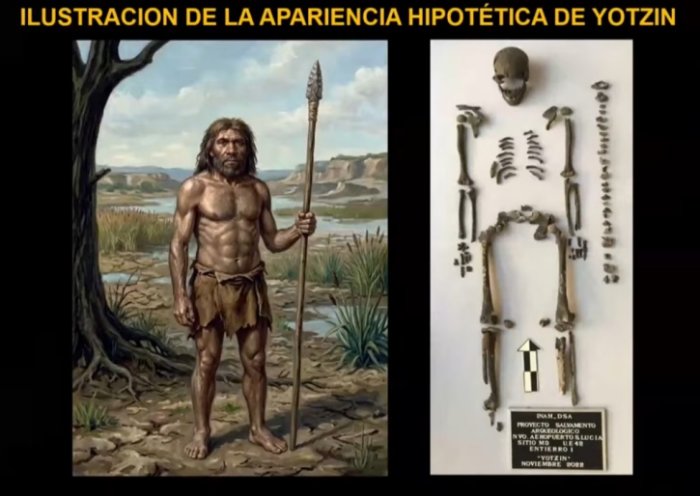
A detailed-up of Yotzin’s look. Courtesy of Arturo Talavera. Screenshot.
That anatomical hyperlink carries vital weight for anthropologists. In a 2003 research revealed in Nature, a analysis group led by Rolando González-José discovered that Pericúes skulls extra intently resembled historical human stays in Brazil than fashionable Indigenous Individuals, suggesting the group was an remoted remnant of one of many continent’s earliest migration waves.
See additionally: Extra Archaeology Information
“An important factor isn’t just having an historical date, however realizing the place he comes from and what his lineage is, which might shed new gentle on human migrations throughout the American continent,” Talavera González famous.
Genomic testing is at present underway on the College of Burgos in Spain, with outcomes anticipated within the first quarter of 2027. As soon as all research conclude, Yotzin will be part of the 22 different specimens within the Basin of Mexico Preceramic Assortment on the Nationwide Museum of Anthropology.
Supply: INAH
Written by Conny Waters – AncientPages.com Employees Author